Monday, August 28, 2006


A short poem reflecting on Christ and what He brings to us...

You as reader may find this a refreshingly short poem, that makes a point using threes. The implication of the use of threes is to elicite a sense of the Trinity's presence. As the poet, I have license to say such things and hope they are within reach by the imagination of the reader. A special artform, poetry does allow an expression of experience, love, observation that other forms are unable to communicate.

Wonder of Christ...
by Peter Menkin

Wonder, wonder, wonder;
starry night.
Christ.

Delight in Eucharist,
Sunday morning.
Waiting.

Wonder, wonder, wonder.
How great.
You are.
So kind. So kind. So kind.

What mercy.
Love.


codebase="http://fpdownload.macromedia.com/pub/shockwave/cabs/flash/swflash.cab#version=7,0,0,0"
id="xspf_player" align="middle" height="170" width="400">


type="application/x-shockwave-flash"
bgcolor="#e6e6e6" name="xspf_player" allowscriptaccess="sameDomain"
pluginspage="http://www.macromedia.com/go/getflashplayer"
align="middle" height="170" width="400"/>


Friday, August 25, 2006


A little on the light side about Angels I have seen--just one...

An older and lighter poem about angels, this poem was written more than two summers ago, making the angel sighting event about four or five years ago. Maybe it was the heat, how the air can rise over a hot blacktop on a summer day creating a mirage. I caught this vision out of the corner of my eye, and when I returned to look at the angel with surprise, what was there was an ordinary man. When I turned back, there was the angel again--seen out of the corner of my eye. Call this an angel sighting.

Summer before last I saw an Angel...
by Peter Menkin

Way out West where cowboys
and Indians live (they live in villages, native), two summers
ago there was an angel
at the gasoline pump--Chevron Station. (Greenbrae, CA.).
He looked like a man; there
are many men, but few angels

encountered at the Chevron, even in summer
the year before regular gasoline prices jumped.
Some like it here, these angels; tell
you these tall creatures as from

early Biblical story times. These are those among us.
Look for them now and then. Portents of friendly,
I hope, visitors walking among us
and driving both General Motors and foreign made
automobiles, filling the tank at the Chevron in summer daylight.

Are you a believer in angels, tall
or like many that these are travelers
come among us to stand and wait, enjoying
us humankind who are really animals of earthly birth.
I wonder.


codebase="http://fpdownload.macromedia.com/pub/shockwave/cabs/flash/swflash.cab#version=7,0,0,0"
id="xspf_player" align="middle" height="170" width="400">


type="application/x-shockwave-flash"
bgcolor="#e6e6e6" name="xspf_player" allowscriptaccess="sameDomain"
pluginspage="http://www.macromedia.com/go/getflashplayer"
align="middle" height="170" width="400"/>


Tuesday, August 22, 2006


Again, the Sunday experience; about returning throughout the week to God...

This is a good place for me to post a poem about returning to God. Notice I use the word "prodigal" to explain the sense of returning to self and God throughout the week. The Sunday experiencc is more than a one day experience.

Prodigal return, confession of mortality...(2002)
by Peter Menkin

Flesh, that yields
to time. Soul entreats
my failures not noticed
in return to God

with open heart.
Stricken with failures
of being away from You.
Exercise:

What's known, you are merciful.
What's known, Christ prayed.
What's known, the cup.

Allow my unbelief
become belief; strengthen us.
We are prodigal; I am.


codebase="http://fpdownload.macromedia.com/pub/shockwave/cabs/flash/swflash.cab#version=7,0,0,0"
id="xspf_player" align="middle" height="170" width="400">


type="application/x-shockwave-flash"
bgcolor="#e6e6e6" name="xspf_player" allowscriptaccess="sameDomain"
pluginspage="http://www.macromedia.com/go/getflashplayer"
align="middle" height="170" width="400"/>


Friday, August 18, 2006


Notes from a Study House; Climate to Receive...a poem...

Every four days I post something on this blog, mostly a poem with notes. This poem is some five years old, hardly revised from the first writing. Sometimes it goes like that with poems. One workshop site I have offered poems on for criticism noted that a poet with five good poems in a lifetime has done well. I like to think this would be one of mine.

You can find this same poem on my website: www.petermenkin.com .


Notes from a Study House in March (2001)
By Peter Menkin

The vine,virginal place within
gateway to God
ultimate
Christ abiding.

The master speaks
of singing us forward
within the paradox of intimacy.
To come back
to mercy and pardon;
return

again like the prodigal son.
The progressive revelation
of theology: God loves us
in invitations
for a climate to receive
in trust.


codebase="http://fpdownload.macromedia.com/pub/shockwave/cabs/flash/swflash.cab#version=7,0,0,0"
id="xspf_player" align="middle" height="170" width="400">


type="application/x-shockwave-flash"
bgcolor="#e6e6e6" name="xspf_player" allowscriptaccess="sameDomain"
pluginspage="http://www.macromedia.com/go/getflashplayer"
align="middle" height="170" width="400"/>


Tuesday, August 15, 2006


Musical experience at Grace Cathedral...

A friend suggested I take out the name "Hilliard Ensemble" from my poem, written about 5 years ago and revised. My feeling was that people who knew the musical group would be interested in the meditative, and even contemplative experience it brought to me.

In this poem I write of the sense of present largeness of loneliness that the music elicted. It was an emptying experience. Music does elicit religious and spiritual sensibilities. As you the reader may recognize in my poem, one emotion and experience does not bar another. You'll find some words of the Hilliard Ensemble end the poem; I thought them moving. I hope you enjoy this poem of a musical experience at Grace Cathedral, San Francisco, California USA.


Thoughts on the experience of a Concert...
by Peter Menkin

The existential aloneness, yearning enters as a musical cry,
like a procession
the music flows through the Cathedral.

I join this human allowance in the finitude.
In retrospect, memory brings days enjoyed,
like the heart seeking. Beautiful sound.
The hearing of the listening ear
enjoins the great spirits [heavenly praise]
they gather
in bringing more clearly a presence:

everlasting peace in a depth of I am,
stays.
What elicited this to mind was sound.
This more than exercise as a movement
in music is recollected from the Cathedral,

where the players invoked a sense of Christ,
done by the Hilliard Ensemble--
music that speaks spare words:

A saxaphonist met a vocal quartet. Listen to this unusual sound.
What they play brings consideration...
in the morning,
in the loneliness, at night.

How the music waits upon us for engagement,
self emptying love given to respond. Allow
your love to come enjoining us to know:
"A blown husk that is finished
but the light sings eternal
a pale flare over marshes
where the salt hay whispers to tide's change."
I am.


codebase="http://fpdownload.macromedia.com/pub/shockwave/cabs/flash/swflash.cab#version=7,0,0,0"
id="xspf_player" align="middle" height="170" width="400">


type="application/x-shockwave-flash"
bgcolor="#e6e6e6" name="xspf_player" allowscriptaccess="sameDomain"
pluginspage="http://www.macromedia.com/go/getflashplayer"
align="middle" height="170" width="400"/>


Friday, August 11, 2006


My friend's Guide Dog is retiring: a poem-like statement called "Poem about a Dog"...

Jan has a Guide Dog that is now 11-1/2 years old; time for retirement for Christmas, the dog. This is a poem about the Guide Dog, but more a poem-like statement. I am sure there are better poem type poems, though I think you as a reader of this blog will enjoy this one.

Jan gets a new dog this weekend, a young one about 22 months. Guide Dogs for the Blind is located on their campus in San Rafael, California. That is North of San Francisco across the Golden Gate Bridge. To get a dog, one must apply, successfully go through their training, which is three weeks on campus. This training includes, sleep, eat, train, get used to knowing the new dog. One lives on campus for the training period. This time is the beginning of a human and animal bond.

I think this poem acceptable for a young girl or boy.


Poem about a dog...
by Peter Menkin

There seems to be no way
to describe "Christmas"the dog
without taking a child's wonder
at this blind woman's friend.

With her, "Christmas" the Labrador,
Jan can go many places
bravely.The two clip along at three miles
an hour. That is good walking speed.

What a wonderful help this friendly,
kind dog has been
these eleven years. We give
thanks for her service
and companionship. Good
dog "Christmas."

She is loved by Jan, her mistress,
for she is a help and a companion;
good at crossing streets, and walking stairs.
Some animals are special to mankind,
and this is a special dog and friend
for many years.

Soon "Christmas" will retire,
to Carol's house, where she is loved.
Guide Dogs for the Blind
will lead Jan to another canine friend.
What a loss for "Christmas" to go,
but a new friend to come.


codebase="http://fpdownload.macromedia.com/pub/shockwave/cabs/flash/swflash.cab#version=7,0,0,0"
id="xspf_player" align="middle" height="170" width="400">


type="application/x-shockwave-flash"
bgcolor="#e6e6e6" name="xspf_player" allowscriptaccess="sameDomain"
pluginspage="http://www.macromedia.com/go/getflashplayer"
align="middle" height="170" width="400"/>


Tuesday, August 08, 2006


What to say about the elderly, whom I visit on a regular basis at a retirement home named The Redwoods. Here is a poem about visiting the elderly.

I visit them in the nursing unit for those who are limited and even sick or very elderly, and in the personal care unit, where they can get along with help. Today's poem reflects how important our years are to us, our lives, and that remembering youth and younger years helps with living a long life.

That's my opinion, though not scientific, it is poetic.

Conversation with aged...(2002)
by Peter Menkin

Speaking with old ones
tells me to pray for myown youth.
I recite a long Psalm,119,
beginning as a confession

but lending my thoughts
and opening my heart to childhood.

Be gentle to memory, for failure
to seek God, and desire good
creates a long list of weakness
and mindless concerns that ignoreGod--
for so many years.

The old ones I talk with speak
of their youth, and I think"
Is this what is on their minds?"
So I soothe and open my heart
to let in healing to younger times

in my life. Even to childhood.
I say words for them,
for others.
It is in the thought before the words,

in the mind before the thought,
present in the heart, and I listen
always desiring to hear.
This talk with old people
leads me to gentleness with myself.

This is their message.
They say to me, "I am living
so long. I hardly think about it."


codebase="http://fpdownload.macromedia.com/pub/shockwave/cabs/flash/swflash.cab#version=7,0,0,0"
id="xspf_player" align="middle" height="170" width="400">


type="application/x-shockwave-flash"
bgcolor="#e6e6e6" name="xspf_player" allowscriptaccess="sameDomain"
pluginspage="http://www.macromedia.com/go/getflashplayer"
align="middle" height="170" width="400"/>


I have been doing volunteer work visiting the elderly for a number of years (almost thirteen now). I consider it a ministy of friendship with the elderly, all of whom I had never before met. I have gone to different nursing homes, and care units or health units. Most frequently I meet people in their room and we talk. This all is done here near where I live, in the same county. I spend about six hours a week doing volunteer work in this area.


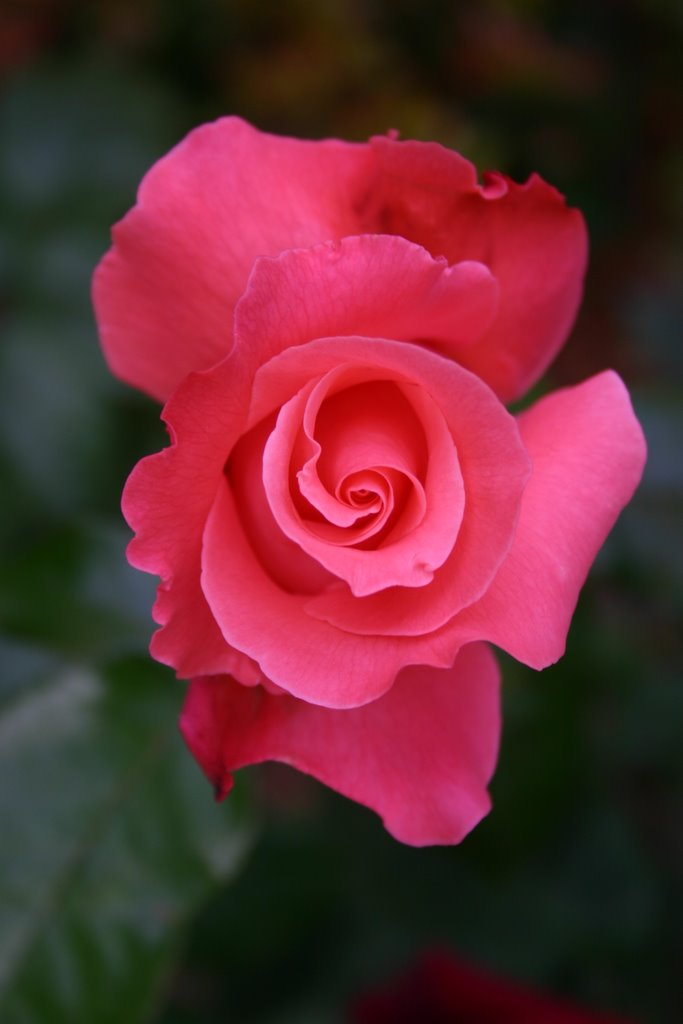
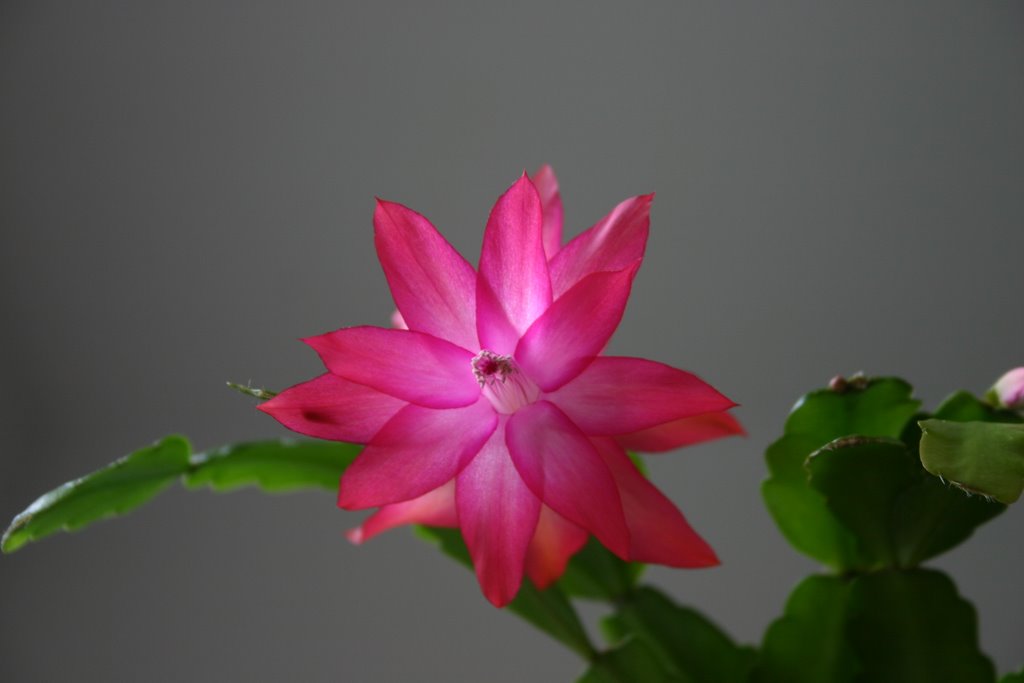
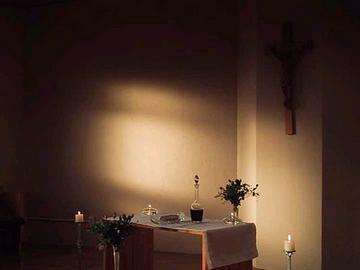
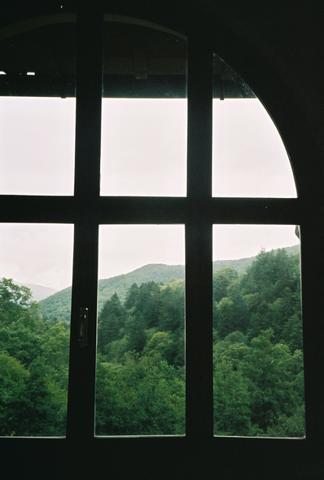
Note about the photographs: The photos of flowers were taken in British Columbia, Canada and Western Washington State by my brother Michael. As for the communion table, it was taken by an Oblate called Benedictsraven. The picture of me, Peter Menkin, was taken in Seattle, Washington at a park by Michael Menkin. The view out the monastery window is also by benedictsraven and is of Camaldoli in Italy as is the communion table. The path is also by Michael Menkin and like others in this series used to illustrate the blog was taken in British Columbia, Canada.

Friday, August 04, 2006


Poem about Communion: Another one that reflects the experience...

It appears that I have a number of poems on the Communion experience. This one is like a prayer. I hope you like it. My experience with Communion has been a refreshing one. I have included a poem by the Episcopal Priest John B. Coburn. It is also a poem like a prayer. I post it here to provide a flavor for prayer and poetry.

Hospitality of Communion...( 2001)
By Peter Menkin

In the poverty that lies of my sorrow,
I asked with the bended
knee of my heartfor gifts as Solomon
did when he asked of You
wisdom.
Wisdom day, I want to know

this rhythm living
with You.
Some wonderfully enter
into spectacular celebration

on Sundays that is a feast,
and I am waiting
to know some of this incredible
Word: let my prayer rise like

a sweet savor,
incense that is happiness.
Discovery, you are the Vine,
and there is such celebration!

I called out in the Church,
Reveal Yourself, O my God!
I am needy and seek You.

In the quiet part of day,
towards sunset,
hear me.

My sorrow brings
me a lowly heart. MayI know this lowly heart
in your poverty.
I have met Youin others.
They invite me
with an ache. Heart. Mine.
Give me
hospitality.
Accept me.


codebase="http://fpdownload.macromedia.com/pub/shockwave/cabs/flash/swflash.cab#version=7,0,0,0"
id="xspf_player" align="middle" height="170" width="400">


type="application/x-shockwave-flash"
bgcolor="#e6e6e6" name="xspf_player" allowscriptaccess="sameDomain"
pluginspage="http://www.macromedia.com/go/getflashplayer"
align="middle" height="170" width="400"/>


In Weakness, Strength
by John B. Coburn, (1914- )

Take my weakness, God.
Take
my failures,
my sins,
my dishonesties,
lies, pride, and lusts.

God knows--you know--
I can't do anything with them.

So, for Christ's sake, take them.

And give me, I pray you,
not so much a clean spirit,
nor a pure heart,
nor a sense of forgiveness
give me
a sense of you,
of you in me
and I in you.

Then shall I be strong
to be
for you.
Simply to be.

From page 408, the book, "Give Us Grace: An Anthology of Anglican Prayers" compiled by Christopher L. Webber. Reviewed by me on Amazon.com at:

http://www.amazon.com/gp/product/0819219622/ref=cm_aya_asin.title/103-3795260-4525434?%5Fencoding=UTF8&v=glance&n=283155 .

Baby baptized in the church: witness

People post all kinds of personal things on the web. When writing something, even a poem, it is better not to be too personal. Afterall, what is written about becomes something of a story. So it is with this poem about a baptism at the Church I attended. This is a revised version from the original, written in 2000 from when the baptism occurred. I hope you like it.

Baptism: a Witness
by Peter Menkin


Silver sea shell: he pours
[the baby waits, spirit come]
water dearly upon head
[what stirs here now]

and brow of annointed
[gentle stroke finger signs]
child held in white lace.
[fabric hung as treasure shroud]

the congregation with all
[on his body, wonderful ceremony]
the children in attendance.
[sustained with the spirit]t

o greet with awe the new
[a prize of gold, shining cross]
arrival amid awakenings
[panaroma in light waiting]

to promises in vows uplifting.
[all say we will, renounce evil]
towards love's hand,
[the baby is sealed]

held forever ours and mine.
[infant cradled, this dear time]
"I hear the sound of angel's
wings," comes Christening
for you are His forever ours.


codebase="http://fpdownload.macromedia.com/pub/shockwave/cabs/flash/swflash.cab#version=7,0,0,0"
id="xspf_player" align="middle" height="170" width="400">


type="application/x-shockwave-flash"
bgcolor="#e6e6e6" name="xspf_player" allowscriptaccess="sameDomain"
pluginspage="http://www.macromedia.com/go/getflashplayer"
align="middle" height="170" width="400"/>


“The Opossum That Came To Visit” (A title)..children's story...

This children's story is about an Opossum that lived under the porch of a friend's home for a while. It is different from my usual poem. I hope you will like it.

“The Opossum That Came To Visit” (A title)
by Peter Menkin

Tilde was a girl opossum who lived under the back porch of the house at the end of the road then a left turn into the drive a walk of 100 feet to the steps that led to the front porch. She had been living there since summer began. Tilde was a pretty opossum to other opossums and had a keen sense of sight--for an opossum.
That’s what the cats that lived in the house said about her. They also said that she was one of the homeliest creatures they’d ever set sights on and in their conversations about Tilde, whom they liked to talk about since she was new, they never once questioned where she came from or where she might be going. For all intents and purposes Tilde was there and had set up housekeeping.

One thing this meant, since Tilde liked a little snack now and then, was she had nibbles available to her when the cats weren’t around. At night Tilde left her cool spot under the porch, where she had a chair and a table and a small radio which got most of the local stations and went out through her front door at the side opening of the porch and right onto the roof of her house, (the people in the house called her roof their back porch), where she found a nice plate of nibbles that the cats had left. But Tilde wasn’t always so lucky to find a full plate of nibbles.

The raccoons who lived around the house often came at night and in their noisy raccoon way made quick eating of the nibbles. Tilde, who was an opossum who liked things the way things should be, and that meant quiet and under her control, especially on the roof of her own house, considered the raccoons, fat things that they were, she often thought, a nuisance.
She planned to put out a jar of peanut butter, leave it for them to eat during one of their greedy visits and relished the idea of their getting peanut butter stuck to the roof of their mouths.
The idea of it brought an uproarious laugh to the whole area. But Tilde didn’t care who heard her. She was willing to let it all hang out and it felt good. “That will teach those raccoons to fool with my plate of nibbles in the middle of the night,” she thought to herself. She almost hugged herself with glee when she thought again about the peanut butter she was going to set out for them.

“What’s the point of all this,” Tilde thought to herself, after she considered putting out the peanut butter, while at the same time relishing the idea of two fat raccoons licking the roof of their respective mouths and wishing they had some water to wash away the peanut butter.
“What is the point,” she reminded herself assertively, for Tilde was an assertive opossum. “The point is that this place where I live is a veritable Garden of Eden, and the nibbles a part of the fig tree--fruit for her day. It was in fact a favorite part of her day because at night she could venture out and make a stop along her travels, which she liked to do, and between looks at the moon have some nibbles. So Tilde decided to put up a sign, one the raccoons could read. You can see a copy of the sign

Tilde put up on dirt path by the drive to the front steps of the house, near the underneath way of the porch:

God is near. Rejoice in the evening and dance in the moonlight, wait for the sun, and begin a good life, enjoy. Or something about peanut butter warning. Or something about keep off the nibbles, and cryptic lettering of ancient kinds, and kindnesses).

You probably can’t read it. Tilde knew what it said, and certainly the raccoons knew what it said. When Tilde was writing for them she kept thinking that maybe it would be better to make a similar, more direct sign--something with a straightforward message like,

“Keep Off the Grass.”But, no that wouldn’t work, because the raccoons never keep off grass anywhere if they want to walk on grass. In fact, in Tilde’s first summer she’d heard the mice that lived in the house say that the raccoons were perfectly happy to not only get on grass, but to dig up grass. Of course there wasn’t any grass for digging up around the house, except down by the creek. Nonetheless, this was getting off the subject and if there was anything Tilde was good at it was getting off the subject. She decided on the sign that you see when you go by the house near the drive.

We’re getting to the end of our story, so to make a long story short, Tilde didn’t succeed in keeping the raccoons from thenibbles. But she did succeed in making a very nice sign, which the raccoons commented on and spent some time looking at.

In fact, the sign was the talk of the raccoon community, which she heard when they started their usual pushing and shoving each other around. The sign stood all summer long. And Tilde often had nibbles on her moonlight walks, by the way.

After all, the raccoons left some. And no, she never did get around to putting out the peanut butter so fortunately that part of her plan was just a passing thought.


codebase="http://fpdownload.macromedia.com/pub/shockwave/cabs/flash/swflash.cab#version=7,0,0,0"
id="xspf_player" align="middle" height="170" width="400">


type="application/x-shockwave-flash"
bgcolor="#e6e6e6" name="xspf_player" allowscriptaccess="sameDomain"
pluginspage="http://www.macromedia.com/go/getflashplayer"
align="middle" height="170" width="400"/>


"Sleep, invited each night with anticipation..."

Sleep, known and unknown petitions
by Peter Menkin

Sleep, invited each night with anticipation.
Lull during the hours to instill a deeper
sometimes,
punctuated with early times of prayer,
for refreshment. Often awakened through force,

intruded by darkness, an intensly desired need
after the setting sun--to avoid. May the dark night
of the soul pass, let the how desired is sleep, yes,
enter to gain marking rhythms as gathering

dreams in continuity with friends in known
and unknown petitions. Sleep,
an entryway to eternity:

as practical rest in this life revealed.
Come and chant the early night
to know the release recollection of life
may grant, then rest

more the often as sleep comforts mind
with balm we call to soothe.
Sleep, time to practice saying and knowing
in deep memory, down beyond conscious awake
among primal places being primitive and entered.

Rest, come to me to allow the self
to rest in thee.


codebase="http://fpdownload.macromedia.com/pub/shockwave/cabs/flash/swflash.cab#version=7,0,0,0"
id="xspf_player" align="middle" height="170" width="400">


type="application/x-shockwave-flash"
bgcolor="#e6e6e6" name="xspf_player" allowscriptaccess="sameDomain"
pluginspage="http://www.macromedia.com/go/getflashplayer"
align="middle" height="170" width="400"/>


This older poem, from 2000, has been revised. The object of the revision is to make it more clear. The subject is sleep and prayer: "Rest, come to me to allow the self/to rest in thee." This refers to resting in God--specifically, Christ. I hope you will like this effort of mine, and find resonance in it, if for anything the way that it tells of preparation for sleep.

Colored streamers move in the wind: a poem

This may be more a series of notes and reflections, a journal entry, more than a poem. It is about the colored streamers representing the Holy Spirit that I viewed in 2000 at Grace Cathedral, San Francisco, California USA. They have the streamers up this year, too. A critic might not like this as a poem, but here it is as I wrote it in 2000.

Following the poem are some notes about it, a sort of correspondence from that time when it appeared first on The Atlantic Monthly Writer's Workshop.

Colored streamers move in the wind
by Peter Menkin (2000)

The upon came incessant, gentle as breeze, light,
waving banners narrow,
these colored streamersf

anned the man of God
during the light resting
upon worshippers who through
hymn song, prayer lips kissing

with raised arms uplifted,
expectations of goodness
acknowledged as a greeting
to Sunday. Cross of giving

love does ascede to ascetic
requests when presented
before an urban multitude.
So his did so with humble

acceptance of divine will,
wounded in love to so join
the dance the spirit brought
upon the souls assembled.


codebase="http://fpdownload.macromedia.com/pub/shockwave/cabs/flash/swflash.cab#version=7,0,0,0"
id="xspf_player" align="middle" height="170" width="400">


type="application/x-shockwave-flash"
bgcolor="#e6e6e6" name="xspf_player" allowscriptaccess="sameDomain"
pluginspage="http://www.macromedia.com/go/getflashplayer"
align="middle" height="170" width="400"/>


Poem reflecting on gifts from Christ: "For God alone my soul in silence waits"

Today, Friday, I visited a woman in the health care unit of a retirement home. She asked me for a word, and I gave her these. I am thinking about them today: "For God alone my soul in silence waits;/from him comes my salvation..." (Psalm 62, BCP). The poem I post today is a personal statement about Christ and I hope has meaning for you as a believer, or if not a believer, gives you insight into the Psalm quotation noted above. It is here without changes after being posted on Frugal Poets writer's workshop. It received some nice remarks.

Christ's enveloping charity...
by Peter Menkin


With Christ,
Serenity.
With Christ,
Hope.

With Christ,
Charity.
There is faith,
Kindness.
There is love,
Knowing.

There is majesty
,Awe.
From Him,
Comfort.
From Him,
Gratefulness.

From Him,
Wisdom.
The serenityIs beyond knowing;
Great peace.
The hope,
Causes the heart to grow large;

Enveloping others.
The charity,
Is of a special kind;
In humility of the self.
In the kindness

There is love,
A knowing majesty
Of awe bringing Comfort, creating
Gratefulness that is itself
Wisdom.

These aphorisms come to mind,
As meditation leads to prayer,
And thanksgiving.

My heart is enlarged, it grows
With the humility of recognition
Of your enveloping charity
For mankind.


codebase="http://fpdownload.macromedia.com/pub/shockwave/cabs/flash/swflash.cab#version=7,0,0,0"
id="xspf_player" align="middle" height="170" width="400">


type="application/x-shockwave-flash"
bgcolor="#e6e6e6" name="xspf_player" allowscriptaccess="sameDomain"
pluginspage="http://www.macromedia.com/go/getflashplayer"
align="middle" height="170" width="400"/>


Hearing read readings from the New Testament, "The melody of the Bible..."

For many years I have enjoyed and learned from hearing read and reading the New Testament. My Bible is "The New Oxford Annotated Bible" New Standard Revised Version. I also hear the Bible on Sunday when I attend Sunday worship services. In the Church where I attend the Gospel is read on Sunday by the Priest (minister), who usually reads in a manner that is proclamation. We have three readings usually.

The second is an Epistle. I look forward during Sunday worship to hear the Gospel and the Epistle. We also read from the Old Testament, but my poem for this post is about hearing the New Testament.

I think the Old Testament has much to teach us, and tells the history of man with God, or as some say, the history of God in human history. Liking the Old Testament, I wanted to include a mention of it so not to ignore the books.

This is a serious revised poem from the original.

The melody of the Bible...
by Peter Menkin


You cause my yearnings,
speakers so fluid as doves
lovely messengers, you bring
me to desire the Gospel
words that make

New Testament.
Desire to hear of Him,
those fruits given
with mercy, healing

in his blood,
"joy for all the members
in the sorrows of the Head."

Short poem reflecting on The Rule for Summertime: "I Desire to See Good Days"...

This poem is a reflection of my living by The Rule of St. Benedict. A brief statement in poetry, this revision from the Writer's Workshop on The Atlantic is improved from its original, yet remains to state how much I like the promise of seeking and living a life in God.
Today I visited acquaintances and friends at All Souls church in Berkeley, where we talked at lunchtime about our experiences with God, and the promise of a better life that our lives are offered.

The night before, I listened to a CD produced by Cowley Publications titled, "Guard Us Sleeping." Besides Compline, there were songs for the night and plainsong hymns of the seven seasons. I was comforted by the monks of the Society of Saint John of the Evangelist, and brought to a sense of reverence for and presence of Christ. Their website: http://www.cowley.org/ .
I purchased the CD at a good price through http://www.amazon.com/ . Here is the location on the internet at Amazon to purchase or read about "Guard Us Sleeping."

http://www.amazon.com/gp/product/1561012556/002-7609909-5364810?%5Fencoding=UTF8&v=glance&n=283155 .

As you can see, I am putting internet sites in my journal, trying to be up to date with others by providing links.

Here is the poem of mine titled, "I Desire to See Good Days." It reflects on The Rule of St. Benedict, and I think is a good poem for Pentecost and Summertime.

I Desire to See Good Days
by Peter Menkin


The sunlight, the hallowed
event of everyday living.
Reminder of Christ
around us, before us, above us.
Peace, I seek the Lord's love.
Set out on this
to see him
who calls.


codebase="http://fpdownload.macromedia.com/pub/shockwave/cabs/flash/swflash.cab#version=7,0,0,0"
id="xspf_player" align="middle" height="170" width="400">


type="application/x-shockwave-flash"
bgcolor="#e6e6e6" name="xspf_player" allowscriptaccess="sameDomain"
pluginspage="http://www.macromedia.com/go/getflashplayer"
align="middle" height="170" width="400"/>


Two poems about centering prayer..."The mysterious majesty"

I practice centering prayer, what is also known as contemplative prayer. These two poems tell of that practice. They are new poems, and short. Regarding contemplation, the monks of New Camaldoli have been practicing that kind of prayer for centuries. Here is their website: http://www.contemplation.com/ .

You may also wish to learn more about centering prayer, as directed and taught by Father Thomas Keating. Here is his website: http://www.contemplativeoutreach.org/frntpage.htm . Sometimes Father Thomas offers a telephone conference about centering prayer, and the conference usually lasts about an hour. The cost is nominal.

The Mysterious Majesty
by Peter Menkin


The earnest prayer
I offer is to receive
The mysterious, majesty
Of God in a quiet
Way of silence.

To wait on the Lord,
This special time,
A set aside for me
And my soul to know
You are.


codebase="http://fpdownload.macromedia.com/pub/shockwave/cabs/flash/swflash.cab#version=7,0,0,0"
id="xspf_player" align="middle" height="170" width="400">


type="application/x-shockwave-flash"
bgcolor="#e6e6e6" name="xspf_player" allowscriptaccess="sameDomain"
pluginspage="http://www.macromedia.com/go/getflashplayer"
align="middle" height="170" width="400"/>


Being with You
by Peter Menkin


The afternoon comes,
Each day prayer time:
Being with You.
Quiet,
Silence my thoughts.

In the presence of God,
In Christ,
In the Spirit
My self approaches,
My self it waits,
To just be.


codebase="http://fpdownload.macromedia.com/pub/shockwave/cabs/flash/swflash.cab#version=7,0,0,0"
id="xspf_player" align="middle" height="170" width="400">


type="application/x-shockwave-flash"
bgcolor="#e6e6e6" name="xspf_player" allowscriptaccess="sameDomain"
pluginspage="http://www.macromedia.com/go/getflashplayer"
align="middle" height="170" width="400"/>


If you recall, I wrote a poem about Pentecost and referenced the God of the Old Testament. One would usually make the poetic statement I made referencing the Trinity or Christ. I feel I need to explain myself, and here is a quote from a book titled, "Introduction to Theology" by Owen C. Thomas and Ellen K. Wondra. It is a book one would find in an Episcopal Seminary course, and was suggested by Father Tierney who is an Episcopal Priest. The poem I refer to is "Pentecost Sunday Prayer."

The quote:

"First, it is clear that the God attested in the Old Testament is one, a unity, and not a plurality. But second, it is also clear that God of the Old Testament is not a simple unity, but a complex, organic, or differentiated unity. All the anthropomorphisms of the Old Testament interpret the unity of Yahweh on the analogy of the unity of the human self. Furthermore, certain divine attributes or powers, such as Spirit, Word, and Wisdom, are distinguished and tend to be personalized and hypostatized. These terms refer to extensions of God's personal presence and powerful activity in relation to the world. They are not systematicallyrelated in the Old Testament, and they overlap in function. But they point to a differentiation in the Godhead that is to some extent analogous to the New Testament differentiation among the terms Father, Son, and Spirit. In the New Testament, the Old Testament terms Word and Wisdom are applied to Christ, and Old Testament texts concerning the Spirit of God are applied to the Holy Spirit. In other words, the New Testament authors were able to understand the relation of the Son and the Spirit to the Father in a way roughly analogous to how the Old Testament authors understood the relation of Word, Spirit, and Wisdom to Yahweh."

I chose the imagery of the Exodus from the Old Testament to say that we are liberated by our God, Christ, and that he brings us to freedom. In any event, I hope you enjoyed that poem "Pentecost Sunday Prayer" about the Holy Spirit bringing us a new freedom in Christ, liberating us. It is not my usual thing to make a sermon or homily in these notes, so I will stop here and let that poem posted previously speak for itself.

"Pentecost Sunday Prayer" and "The Winds of Youth in Spring": two poems...

Spring has certainly come to this town where I live, North of San Francisco across the Golden Gate Bridge. The second poem posted today is about Spring, and though this month will mark Summertime, I can still feel Spring. The poem itself was written in 2001, and it has never been published but is now here for you, reader.

The first poem is one from 2002 and though posted on a writer's workshop, elicited no comments. Otherwise, I would fill you in on the comments and maybe post those with the poem on Pentecost. By the way, I have trouble spelling "Pentecost" every year. And every year I look it up on the Brittanica website because they have a Merriam-Webster Dictionary.

Because I spell it wrong, it doesn't find the word. I suggest to the publishers of the Brittanica site that they create the dictionary so that misspelled words can find the right spelling. Is that so hard? It is by a process of illimination that I get the right spelling.

Pentecost Sunday Prayer (revise)
by Peter Menkin -- 2002

For I am empty and forlorn,
so I hope and pray.
Tongues of language and flames.

Lord.
I search; let me
welcome the Holy Spirit.
The God who brought
us out of Egypt to freedom;

let God do this emancipation:
accept and welcome,
and let us receive the Spirit.

Reach out, lift the heart,
have faith that the Spiritfire
comes settling in, penetrating us:
Goodness.

Tongues of language and flames.
Dance in our hearts.
Let it be me in Church,l
et it be me, let it be others.
Come Holy Spirit. Consuming fire;
burning yes.


codebase="http://fpdownload.macromedia.com/pub/shockwave/cabs/flash/swflash.cab#version=7,0,0,0"
id="xspf_player" align="middle" height="170" width="400">


type="application/x-shockwave-flash"
bgcolor="#e6e6e6" name="xspf_player" allowscriptaccess="sameDomain"
pluginspage="http://www.macromedia.com/go/getflashplayer"
align="middle" height="170" width="400"/>


The winds of youth in Spring, they call...(2001)
by Peter Menkin

Many times my youth
comes to me, like a breeze
stirring the landscape,
and all that's in it, reminding me
that my companionship

with other living things
is renewed by growing.
Birth is an exclamation
surprise, and my springs
of blood in marrow of bone

are enlisted with birth's
great divine entry
to this world. We adore
the strength of youth,

calling to it in unknowing
conversations that continue
as part of daily life.

Fresh stirrings and wonderment.
This touch of exclamation
is the wind caressing
the spring day, awakens

the years even during
the aches of moments;
so alluring and enjoyable,
this renewing youth.
Carried into older age.


codebase="http://fpdownload.macromedia.com/pub/shockwave/cabs/flash/swflash.cab#version=7,0,0,0"
id="xspf_player" align="middle" height="170" width="400">


type="application/x-shockwave-flash"
bgcolor="#e6e6e6" name="xspf_player" allowscriptaccess="sameDomain"
pluginspage="http://www.macromedia.com/go/getflashplayer"
align="middle" height="170" width="400"/>


A poem as poetic list, a list as poem about sin and confession...

This isn't a poem, it is a poetic list that poses as a poem. I also think it is a poem that is a list, that explains one of the things I do to stay in relationship to God. I think you will find it understandable; no secret message, here. Just work to do to keep things and my life straighter than not.

Another of my poems written five years ago, this one was also originally posted on The Atlantic Monthly Writer's Workshop on the internet. Today, should you go to the Reposte & Post section of the online Atlantic, you would find little action in the Writer's Workshop. Too bad, and a real loss for me because it was so helpful. Then in 2001 it was a lively and interesting group, often encouraging of my ambitions to write an acceptable poem--about God and Christ.

Returning to the poem posted here: Some people don't believe in formal confession, to a Priest. The Episcopal Church offers the sacrament of reconciliation, called confession. It is done one on one with a Priest, and is more a spiritual conversation. The practice as I know it allows the confessing to see the confessor. In other words, it doesn't take a dark room, but can be said in a chapel with no one else around to hear.

Moreso, this poem alludes to such confession, but I think you will find it covers the idea of setting things right with oneself and one's God. And with others in one's life. As you can see, I think it is a good practice and also a form of self examination. Certainly, it is a poem as confession since it tells the reader that I believe I am a sinner and do sin. That is a lot of public revealing, in itself.

Relief from burden and grievings
by Peter Menkin - 2001

Sin is
awareness that
forgiveness offers
the covetous,
and a long list
of human frailties more,
too numerous to name
relief from burden
and grievings of the soul.

What to do with sins
not in conscious.
Do not fret, listen
to your heart; be
still and know
that I am God. Live
with sorrow, embrace
joy, allow acceptance
of the human, eschew
evil. Know failure;
willingly embrace
humility. Tears.

Live life a friend
said. Yes!

Garden variety, thorns,
common knowledge, blindnesses,
bring my misgivings
to purity
~May I grieve You not
Lord~

You are good.

Yet I do.

Hear
my confession.


codebase="http://fpdownload.macromedia.com/pub/shockwave/cabs/flash/swflash.cab#version=7,0,0,0"
id="xspf_player" align="middle" height="170" width="400">


type="application/x-shockwave-flash"
bgcolor="#e6e6e6" name="xspf_player" allowscriptaccess="sameDomain"
pluginspage="http://www.macromedia.com/go/getflashplayer"
align="middle" height="170" width="400"/>


Last poem of Easter, a return to the first of Easter...

This simpler poem tells of Easter Vigil, at this end of the Easter Season, after the Ascension, a return to the beginnings of the Easter of this year. Now five years old, I rediscovered this older poem on my computer from 2001. Originally posted on the Atlantic Monthly Writer's Workshop website, it appears here unchanged from that original post. It seems it was a good poem from the start. I hope you like it.

Thursday's vigil, night time
by Peter Menkin - Apr 13, 2001

We await
in vigil
a mysterypromise.
A surprise
of one in three,
eternityopens its gates.
The cross,
the tomb,
sorrow allows
ecstacyof kindness

for He is not
here, the angel
tells. Easter word.
We stretch our
arms out to you.


codebase="http://fpdownload.macromedia.com/pub/shockwave/cabs/flash/swflash.cab#version=7,0,0,0"
id="xspf_player" align="middle" height="170" width="400">


type="application/x-shockwave-flash"
bgcolor="#e6e6e6" name="xspf_player" allowscriptaccess="sameDomain"
pluginspage="http://www.macromedia.com/go/getflashplayer"
align="middle" height="170" width="400"/>


Is it a spirit that "quenches" or is it "quenching." Quenching is probably right...

The ending of this poem says, "Quenches." The grace of God quenches the spirit, bringing peace is the thought I wish to communicate. Yet I think the right word is "Quenching", according to those who have read the poem. The grace of God is quenching my spirit for its thirst and its jangle of thoughts and busyness. Here is the poem, some words about contemplation, and even at times, meditation.

Waiting on the Spirit
by Peter Menkin -- Jun 3, 2002

Inner life aware of soothing Spirit.
Waiting.
Grace that underlines
living.
Ask for waters
that spring from abundance.
Quenches.


codebase="http://fpdownload.macromedia.com/pub/shockwave/cabs/flash/swflash.cab#version=7,0,0,0"
id="xspf_player" align="middle" height="170" width="400">


type="application/x-shockwave-flash"
bgcolor="#e6e6e6" name="xspf_player" allowscriptaccess="sameDomain"
pluginspage="http://www.macromedia.com/go/getflashplayer"
align="middle" height="170" width="400"/>


Communion with God and others through Eucharist...a continuation of the series on communion...

My web page has many of my poems, and this one titled "The Journey of Communion" is from those pages. About my previous post of May 11, a friend says, "Communion is not really about either the giver or the receiver. It is about receiving the whole person of Jesus: Body, Soul, Mind and Spirit. And in receiving Jesus, we become more like Him, both individually and corporately. It is never just a 'Me and Jesus thing.' " In thinking about her comment, I wanted to post something about communion again, and so this one.

Regarding that May 11 post about communion, I revised the previous post to better reflect her thoughts. When revising it, I borrowed from her words, including these: "I know and am known by God, with others." I thought her criticism did reveal a more full and better statement about communion, and included those words. I hope it's legal to borrow some words for ones poem from a friend or from a criticism. That poem to which I refer is titled, "Communion with a Bishop." It seems that this older poem, posted here, is a continuation of a statement about communion. So I call the subject of this post today, "Communion with God and others through Eucharist...a continuation of the series on communion..."

This is the address for my website:
http://www.petermenkin.com/


The journey of communion...(2002)
by Peter Menkin


Is it fair
for Church to be so sorrowful?
And joyful, too, the same at one.

We sang Hymn 204,
"Love is come again
like wheat that springeth green.
"Sweetness and joy meet.
We share our lives, their fabric

weaves us in God.
Is this an adventure, I yearn
for love--died.

"Now the green blade riseth..."
We are bound together
in our mortality.
My soul.

The sharing of bread and wine
began earlier in the day and went
on in journey.

In our awakening to the Sunday
when in sunlight the shadow
of myself appeared on a tree
from my deck.

I knew I am
this day to take communionso said
"O ye works of the Lord,
bless ye the Lord."

After communionI sing
"love lives again"
minutes previous wondered, thought and prayed
on my knees.
We must begin again.


codebase="http://fpdownload.macromedia.com/pub/shockwave/cabs/flash/swflash.cab#version=7,0,0,0"
id="xspf_player" align="middle" height="170" width="400">


type="application/x-shockwave-flash"
bgcolor="#e6e6e6" name="xspf_player" allowscriptaccess="sameDomain"
pluginspage="http://www.macromedia.com/go/getflashplayer"
align="middle" height="170" width="400"/>


Yes to communion with a Bishop, a special experience...

This poem has been thoroughly reworked again, and perhaps it will settle down. It is about communion with a Bishop, a special experience, and for me a not so usual one. I found myself invited to this communion that celebrated the installation of a professor's chair at Church Divinity School for the Pacific in Berkeley, California. Now a few years ago, the memory of the experience and the communion remain in my memory.

Communion with a Bishop
by Peter Menkin


Yes, to communion,
to the Bishop
who offered this
to a roomful of faithful.

Yes, to communion:
Wine and bread. The warmth of the moment,
revealing an intimate
belonging. Engaging me and others
in the quickness of life, with the eternal
experience that is beyond imagination.

“My ways are not
your ways,” says God.

Hospitality to acceptance,
the Lord and the Bishop
are welcoming in the spirit of warmth and friendship.
Yes, to communion.

Those present, line up wanting the holiness.
We stand with reverence.
All of us bow before taking the elements.

“The body and blood
of our Lord Jesus Christ,”
as blessing,

of veil of time and place.
Yes, to the peace of Christ.
I reveal myself in prayer and go on in silence.


codebase="http://fpdownload.macromedia.com/pub/shockwave/cabs/flash/swflash.cab#version=7,0,0,0"
id="xspf_player" align="middle" height="170" width="400">


type="application/x-shockwave-flash"
bgcolor="#e6e6e6" name="xspf_player" allowscriptaccess="sameDomain"
pluginspage="http://www.macromedia.com/go/getflashplayer"
align="middle" height="170" width="400"/>


Some words as a poem that say Evening Prayer is a comfort and comforting...


Evening Prayer is practiced in the Church I attend, and I find it an intimate way of worship. Some people call this time of prayer The Office, or the Work of God. In my poem you'll find the statement that it is both a comfort, and comforting.

"Comfort in Evening Prayer"
by Peter Menkin

The familiar Church is open,

and a regular comes to Evening Prayer:

delicious, memorable ways,

words that comfort.

Comfortable words bring

the sense of God.

We offer together"yes".

In their homes, others hear

the silence of the hour,

not knowing yet knowing.

United in prayer, many say

the Office in solitude.

"Seek him who made the Pleiades

and Orion."


codebase="http://fpdownload.macromedia.com/pub/shockwave/cabs/flash/swflash.cab#version=7,0,0,0"
id="xspf_player" align="middle" height="170" width="400">


type="application/x-shockwave-flash"
bgcolor="#e6e6e6" name="xspf_player" allowscriptaccess="sameDomain"
pluginspage="http://www.macromedia.com/go/getflashplayer"
align="middle" height="170" width="400"/>


We go on in spirit with the journey with Christ this Easter...a blessing of the Spirit...

I have been thinking about Easter, and at Church we have been talking about the risen Christ. This poem posted here was not written in Easter, but afterward in May of some years ago. I liked how it talked of journeying on with each other in Christ. So it seems also to fit the theme of the Gospel this day that is about Thomas and the risen Christ coming to visit the disciples in a room.

Renewing on the journey
by Peter Menkin --May 16, 2001

Omega, birth with Paschal
blessings into the Spirit
that is renewing me, how
alert one comes to the body

mystical. Drawn one is;
we are pilgrim
travelers on journey for
the everlasting strivings. Live

the cross; to know and meet
the cross and embrace the travails
with desire in the Omega that
is I Am. Enlarged in an exclamation:
surprise, and my springs
of blood in marrow of bone
are enlisted with birth's
great divine entry;

You are surprise.


codebase="http://fpdownload.macromedia.com/pub/shockwave/cabs/flash/swflash.cab#version=7,0,0,0"
id="xspf_player" align="middle" height="170" width="400">


type="application/x-shockwave-flash"
bgcolor="#e6e6e6" name="xspf_player" allowscriptaccess="sameDomain"
pluginspage="http://www.macromedia.com/go/getflashplayer"
align="middle" height="170" width="400"/>


Another note about the word "apperception" from the new poem on Easter posted previously. I want to apologize for being so sloppy in defining the word. Something not well done in the previous post. Here is a better definition.

1 : introspective self-consciousness
2 : mental perception; especially : the process of understanding something perceived in terms of previous experience.

I chose to go with the second definition, thinking I didn't like the first for introspective self-consciousness was not what I meant. "Apperception" is a new word to me.

"...(O)ur hearts are opened wide with a sweetness of love that is beyond words." RB

Today this Easter Wednesday something a little different. A poem posted twice, the same one. Each is a little different. The first is the newest version and incorporates a quotation from The Rule of Saint Benedict. The second version is not so much older than the first. It written just the day previous on Tuesday, another beautiful Spring day here in Northern California across the Golden Gate Bridge in the small city where I live. Note that in the second, the earlier of the two versions, there is a line about Christ and the Spirit in the blood giving life. Not so in the first one.

Embrace of God (2)
by Peter Menkin


The heart yearns,
wishes for warmth, finds opening
to the Lord. "With tears and the attention
of heart..." this divine love sustains life. More.
In the secret of the self, within the psyche,

we yearn for knowledge with self recognition of existence,
Christ does feed us. More. The beyond
calls; mankind discovers something uniquely
greater than the mysteries that Intrigue senses and thoughts."

...(O)ur hearts are opened wide
with a sweetness of love
that is beyond words."

Easter reveals to us this greater than,
this renewal of the good, exploding with eternal might
there is love greater everlasting
gift unforgettable recognized with prayer. More.
With a knowledge of expanded eternity beyondthe measure of imagination--
the gasp of surrender.

Promise that tells us God
Embraces the spirit of mankind.


codebase="http://fpdownload.macromedia.com/pub/shockwave/cabs/flash/swflash.cab#version=7,0,0,0"
id="xspf_player" align="middle" height="170" width="400">


type="application/x-shockwave-flash"
bgcolor="#e6e6e6" name="xspf_player" allowscriptaccess="sameDomain"
pluginspage="http://www.macromedia.com/go/getflashplayer"
align="middle" height="170" width="400"/>


Embrace of God (1)
by Peter Menkin


The heart yearns,
wishes for warmth, finds opening
to the Lord. A deeper thing,
like the blood that courses through the body

this divine love sustains life. More.
In the secret of the self, within the psyche,
we yearn for knowledge: recognition of existence,
Christ does feed us. More. The beyondcalls;

mankind discovers something uniquely
greater than senses and thoughts.
Easter reveals to us this greater than,
this renewal of the good, exploding with eternal might.
There is love greater, everlasting.

Gift unforgettable recognized in prayer. More.
With apperception--
the gasp of surrender.
Promise that tells us God
embraces the spirit of mankind.


codebase="http://fpdownload.macromedia.com/pub/shockwave/cabs/flash/swflash.cab#version=7,0,0,0"
id="xspf_player" align="middle" height="170" width="400">


type="application/x-shockwave-flash"
bgcolor="#e6e6e6" name="xspf_player" allowscriptaccess="sameDomain"
pluginspage="http://www.macromedia.com/go/getflashplayer"
align="middle" height="170" width="400"/>


In the poem, the word "apperception" means to recognize, to have an inner sense (without self consciousness), an awareness. That is almost the dictionary definition, more the second definition of the word.

Note: You may visit my website which has poetry and is a personal website at:
http://www.petermenkin.com/

Poems of the spiritual and religious experience... about Saturday after Good Friday...

When I first posted this poem on a workshop site (The Atlantic Writers Workshop) there was more discussion than I could imagine. This was my response to the question of "What are you doing writing this kind of poetry?"

My note to Chris about the thematic sense that urged me on to write about the hymn as my version has many dimensions. But the one that stayed foremost is described in the response on the thematic sense I saw in the goodness of God. That has personal meaning to me, and it tells me something of the nature of Christ.

That is important to me for I have God in my life, and I want that experience and reality. Call it a presence.To expand a moment, if there is a presence allowed in this effort of mine, then to the good. I think you can touch and feel what is presence, and that it is a poetic thing, too, is important. Perhaps this helps me to share the work a little more with you. Thank you again for your comments and provocations to look at what is being done by me with the exercise I created.This was a second response in the same line of discussion. Thank you for bearing with me this Good Friday as I post all of this:

Chris
This is a poem of the religious experience. I have often wondered if something like this is more religious than literary. My interest has been to stay literary with them, while being religious or spiritual. There is a very large supply of religious and spiritual poetry, and this small effort that is a kind of work copying another, though briefer and somewhat different, seems to have sparked a genuine sense that it is religious.In a way, I am flattered. I think that the personal is important, as is the individual experience, and I am glad you took the time to read the poem and note that it lacked that dimension for you as a modern thing to know.My assessment is that these are experiences that one can know and that one may also wonder about.These two comments are direct quotes from the discussion, so they have their original sponteneity.

Now, the poem:

To know something about God
by Peter Menkin, Mar 2002

With apologies to the hymn of the Syriac Church

So much grief to learn
Christ died and descended
into hell.
The vigil of Saturday
goes on. Imagination and
faith follows the journey.

He is alone in the tomb,
cold to touch.
Yet He continues.

May we with him.
He showed us God,
when he heard them cry,
"Take pity on us."

Death held no holdon Him.
He traced his nameon their heads,
those in darkness and fetters.
They belong to Him.




codebase="http://fpdownload.macromedia.com/pub/shockwave/cabs/flash/swflash.cab#version=7,0,0,0"
id="xspf_player" align="middle" height="170" width="400">


type="application/x-shockwave-flash"
bgcolor="#e6e6e6" name="xspf_player" allowscriptaccess="sameDomain"
pluginspage="http://www.macromedia.com/go/getflashplayer"
align="middle" height="170" width="400"/>


Morning day star, poem prayer for the day's start...faith

Thank you for stopping by my journal (blog). Again, some thoughts on the morning and the sense of how a day can begin. Every morning isn't like this one, but fortunately I can report that most mornings are good ones. In this poem about the start of day the end says the soul groans. I had some difficulty with the ending, for I thought what does that mean?

There is a kind of inner moment or moments where the sense of relation with the ultimate and Almighty God makes for a humility and in that an effort to live in the world and in the spirit. Maybe you have experienced something like this yourself, reader. I've titled the poem "Faith in God" for that is what the experience is about.

I am reading Evelyn Underhill's thoughts for Lent titled, "Lent With Evelyn Underhill," edited by G.P. Mellick Belshaw, a Morehouse book. She writes of Faith in the reading for today, Friday:
"The fruits of the Spirit get less and less showy as we go on. Faithfulness means continuing quietly with the job we have been given, in the situation where we have been placed; not yielding to the restless desire for change. It means tending the lamp quietly for God without wondering how much longer it has got to go on..."

This faith in God
by Peter Menkin

Our meditation moves
to contemplation: today
let it be unto me;
so morning prayer starts.

I ponder my desire
for release from earthly pain,
find out about flesh again,
discovering the Spirit
holds other fruits: Wait
on the Lord.

Can one know, glimpse--the great yes
of vastness greater
than mountains and hills.
Creation, all being.

Spark, star of day
burning bright, sign of wonder--
the soul groans this day.


codebase="http://fpdownload.macromedia.com/pub/shockwave/cabs/flash/swflash.cab#version=7,0,0,0"
id="xspf_player" align="middle" height="170" width="400">


type="application/x-shockwave-flash"
bgcolor="#e6e6e6" name="xspf_player" allowscriptaccess="sameDomain"
pluginspage="http://www.macromedia.com/go/getflashplayer"
align="middle" height="170" width="400"/>


Spring has sprung, clocks go forward...

Talking about the weather, we have rain again. Spring is here, it arrived on the 21st of March, yet rain and rain again. This poem is about the Springtime where I live, giving the reader a sense of this place--hopefully.

Holding the moments of creation's good
by Peter Menkin

The season has changed
coming to this small town
in the west, California.
The shadow of the mountain
a sleeping Indian princess lies

there in Tamalpias,
as buds show;
Spring has come, colors
awaken. Our bodies rest
with the pleasantry of aroused
knowledge this earth is good.

Ancient elements of mankind
beckon from the blood and sinews,
a memory that this was a promise
of earth, receiving us with splendor.

In the distance, among hills,
fog rolls over the tops,
and for a while in this world
of strife and evils of war
there is the knowledge
creation is with us, good.


codebase="http://fpdownload.macromedia.com/pub/shockwave/cabs/flash/swflash.cab#version=7,0,0,0"
id="xspf_player" align="middle" height="170" width="400">


type="application/x-shockwave-flash"
bgcolor="#e6e6e6" name="xspf_player" allowscriptaccess="sameDomain"
pluginspage="http://www.macromedia.com/go/getflashplayer"
align="middle" height="170" width="400"/>


Site Meter


Poem about Lent unfolding during the season...

Each Lent has been different. This year my penitential practices are light. A friend of mine, who is in her eighties, suggests a light Lent. It is her opinion that various things will come to mind during the season. I think she is right. For my reflection, I am reading "Lent with Evelyn Underhill" edited by G.P. Mellick Belshaw (publisher, Morehouse Publishing).

This is a second edition, not the first. In one reading, not typical of most of them, she names the "Seven Roads to Hell": Pride, Envy, Anger, Sloth, Avarice, Gluttony, Lust. These are enough to think about for that one day's exercise.

This poem is almost four years old, and I post it here on this blog to give it an opportunity to express some of my temperament, and perhaps the temperament of others, during this season. It is about how thinking and feeling about matters in Lent can unfold during the Lenten season. It is also about how a person can find him or herself unfolding, as did I that year.

Unfolding in the silence and sound...
by Peter Menkin

Came to Lent
this season
with fear of the Lord
and weakness. Asked of Christ,

that the moon will not strike
at night, nor else when lost among
strangers cause me adversity of pain.I am Yours,
You are mine. I abidein You.

Exercises:Making room for silence,
the sound of life;
listening as penance
these weeks. Long time.

Intimate moments in people's talk, their voices
about Triune God mystery
mark the weeks. Barren depths
of sin reveal themselves.
This is unfolding.


codebase="http://fpdownload.macromedia.com/pub/shockwave/cabs/flash/swflash.cab#version=7,0,0,0"
id="xspf_player" align="middle" height="170" width="400">


type="application/x-shockwave-flash"
bgcolor="#e6e6e6" name="xspf_player" allowscriptaccess="sameDomain"
pluginspage="http://www.macromedia.com/go/getflashplayer"
align="middle" height="170" width="400"/>


Here is a statement, as a poem, about size and mystery...

Welcome to this statement about God, his immensity and the largeness of his creation. The poem is from 2001 and an overlooked poem by me. I discovered it recently among my collection of older poems, which I had written. So liking it, here it is to be shared and hopefully appreciated.

The poem identifies in a round about way how I am a seeker and wanter of promise divine.

Seeker and doubter, wanter of Promise divine...
by Peter Menkin

This continent
moves;
seas arriveas bearers
and takers.

We celebratethe earth.
Water springs
from pools deeply
hidden, refreshing
mortal companionship
with divinesimplicity.

Born, lived under,
died to be given
by the hand of God
a suspenseful dedication
in voice heard with promise:

they will never perish
sweet allowance, forgiveness
immortal. Wondering
may we live in, within
your presence. Spirit come.


codebase="http://fpdownload.macromedia.com/pub/shockwave/cabs/flash/swflash.cab#version=7,0,0,0"
id="xspf_player" align="middle" height="170" width="400">


type="application/x-shockwave-flash"
bgcolor="#e6e6e6" name="xspf_player" allowscriptaccess="sameDomain"
pluginspage="http://www.macromedia.com/go/getflashplayer"
align="middle" height="170" width="400"/>


To turn, to turn, to turn in Lent...

What I have noticed this winter, as we near spring, is bare trees. Recently, they remind me of the spareness of Lent and its beauty. Here is a new poem about this Lent.

Coming back to the Lord in Lent...
by Peter Menkin


Quiet, listening to the silence
this Lent, aware of the largeness
of God, the short life of man and woman.

We frail creatures, loved as part of creation,
return to the Lord this season.
This is a great thing, and part of the Church year--
refreshing in its way, but a road that is taken while observing
on its route the winter rain, the bare trees,

other days the light--
the daily day offers time. It is a surrounding
experience, penitence. Ever even so small an offer,
there is the reminder that we have time
to come back. To turn, to turn, to turn.


codebase="http://fpdownload.macromedia.com/pub/shockwave/cabs/flash/swflash.cab#version=7,0,0,0"
id="xspf_player" align="middle" height="170" width="400">


type="application/x-shockwave-flash"
bgcolor="#e6e6e6" name="xspf_player" allowscriptaccess="sameDomain"
pluginspage="http://www.macromedia.com/go/getflashplayer"
align="middle" height="170" width="400"/>


Intimacies and spiritual closeness expressed in a poem...

Just today, I was talking with a friend about spiritual intimacies. We asked each other what were the acts or experiences during Worship that each remembered as a special time. I said, during the offering of the cup as a lay minister when people come to the rail to take communion. This is an intimate time of offering, and there is a limit to what one offers spritually when saying, "The Blood of Christ, the Cup of Salvation."

It is this limitation that accentuates the intimacy of the moment and the prayer. As an instrument, it is God's work that is at work. And in seeming contradiction, we two engaged in offering and the taking of the cup have in that few moments have a special connection.

Welcome to this older poem of mine written during a retreat at New Camaldoli, Big Sur, California (monastery). I was taken with the spiritual intimacy of the Communion Service, and observed one woman who I thought especially devout during this silent retreat. I was inspired, and mystified by the communion experienced on this Sunday at the top of the mountain above the Pacific Ocean...engaged in the mystery of it with others and so wrote my observation of the worshiper.

Spiritual recognitions: Chapter House intimacies
by Peter Menkin (2001)

You were there, and I knew you tangible
from love and desire, recollected:
the fine mind, and education,
the religion and spiritual teachings

held privately with a modesty
in respect for reverent teachers.
Your prayers were those I listen
to as you offer mention to God
for the women of the Church.

Jesuit minds have instilled in you, spiritual strength,
stranger known to me in the bread and wine--
the willingness to wear a silvercross. More beautiful because you
express pain and love for the world
in its excess, of so much evil. Forgive

me I had to notice you in communion,
in archtype as woman seeking the divine
on the mountain in winter by the Pacific
Ocean: Vistas of rock, Route 1, Big Sur
Edge of the world, of the awe consistent:
We are at the place of prayer tangible

Christological; an immensity of the burning fire
with white in Trinity, mysterium.
New Ecumenical spirits sweep the world.
So generous a meal; we partake through
the day wrestling meditation,
and prayer to witness and speak. Everflowing.

You came for strength and wisdom, ignited.
All of us were brought closer to God together.


codebase="http://fpdownload.macromedia.com/pub/shockwave/cabs/flash/swflash.cab#version=7,0,0,0"
id="xspf_player" align="middle" height="170" width="400">


type="application/x-shockwave-flash"
bgcolor="#e6e6e6" name="xspf_player" allowscriptaccess="sameDomain"
pluginspage="http://www.macromedia.com/go/getflashplayer"
align="middle" height="170" width="400"/>


Moses' face shone...a Poem about God and Man...

Many figures in the Bible have sought God. The more memorable of all is Moses, at least in this poem about the great friend to God. In a moment, I will post the poem, which is some years old--not so old, though. First, a short exchange that was posted on The Atlantic Monthly site when the poem was first given to be read. The exchange describes the poem and makes a humorous remark about wishing to visit with the infinite.

Peter
(This poem is...) A condensation of faith and belief. I wonder at 'visit' (in the text), but accept that you feel this to be true. If I were to admit to faith I would see it as my task to visit the infinite.
Janet

Janet
Thank you for your thoughtful note. I was thinking a visit would be just fine.
Peter

Words seeking prayer
by Peter Menkin - Apr 26, 2002

Moses’ face shone
when he met with God
on the mountain.
Inner light, transforming
vastness of history,
you God love us.

The I AM.
Come visit us with your
immensity and allow
us the work of prayer
to speak with
and know you, too.


codebase="http://fpdownload.macromedia.com/pub/shockwave/cabs/flash/swflash.cab#version=7,0,0,0"
id="xspf_player" align="middle" height="170" width="400">


type="application/x-shockwave-flash"
bgcolor="#e6e6e6" name="xspf_player" allowscriptaccess="sameDomain"
pluginspage="http://www.macromedia.com/go/getflashplayer"
align="middle" height="170" width="400"/>


Repenting and coming back to the Lord in Lent...Imaginary Churchgoer's story...a poem...

Welcome to another in my imaginary group of Churchgoers. For a moment, consider this middle aged woman in Lent who during her lifetime, repented of acts and other matters during this season to return to the Lord. The funny thing about this intelligent woman, our imaginary Churchgoer, is that she also liked Buddhism. Nonetheless, she was a regular Churchgoer. Here is a poem for the beginning of Lent:

Grief at Lenten season...
by Peter Menkin, Feb, 2002

The season days lengthen,
light lasting longer, griefcame to Lisa.
She kept the precepts,and the practices
of the calendar, but only God

knew of her reason to wear
no makeup, adornments,ear rings.
But one level of her penance,
for before God in Christs
he married and divorced,
offering to the Almighty
penance.Seeking forgiveness

and reconciliation she
now acknowleges private sorrow,
wound of the wounded
self.
Abased, but dust and ashes.

Tomorrow she starts opening
her heart, opening her heart,
revealing her heart in Spirit.
Ash Wednesday.
Lent is a balm; its mystery
communicated by devotion
and religious living.

Looking forward to Easter
hymns,to sing,
joy. So soon to reach out
in loss that is human failing
forgiven.
We seek to enter your gates,
Lord.


codebase="http://fpdownload.macromedia.com/pub/shockwave/cabs/flash/swflash.cab#version=7,0,0,0"
id="xspf_player" align="middle" height="170" width="400">


type="application/x-shockwave-flash"
bgcolor="#e6e6e6" name="xspf_player" allowscriptaccess="sameDomain"
pluginspage="http://www.macromedia.com/go/getflashplayer"
align="middle" height="170" width="400"/>


Thursday, August 03, 2006


On preparation and entry to contemplative prayer: a Poem...

Welcome to a more personal poem, written at an urban monastery, the study house of Camaldolese Monks. I wrote this poem with the thought of following the preparation and entry into contemplative prayer.

What better time to do so than on retreat in the year 2002 at Incarnation Monastery in Berkeley, California (San Francisco's Bay Area). I hope you like this memory of prayer, which appears to be relevant to my prayer life today. I say "appears to be" because every preparation and entry into such prayer is not the same. Yet it is similar enough for the poem to have validity today.

You can find this poem on my personal web page http://www.petermenkin.com/ . The page is not complete at this time, still a work in progress. It will contain many poems, some that have not been posted on the web previously.


On Retreat (revise)
by Peter Menkin

I: Preparation

Attend with the ear of your heart
Listen in the silence
at night or daytime
through trials and living.
This Rule brings God, the Lord
closer. Labor of obedience:

Before beginning a goodwork,
pray earnestly.
We are the Lords counted
sons and daughters.
The path offers good gifts,
open your eyes to the light.

Arise from sleep.
The Rule offers the voice
from heaven this day.

II. Prayer of request and confession

So much strife, the world
encroaches and wearies
with wearing. Stains.
Run on with life's light;

I seek this lightness
of being
that darkness and death
not overtake me.
The uncommon call, hear
his voice--do not harden your heart.

Mercy that gives and opens,
says receive these words, so offered.
Learn the fear of the Lord
in everyday living--even a moment in time.

Day star Benedict,
man of God speakingacross
centuries in holy words:
For a man or womanin days journey; arise

my soul and spirit to
join this way.

III. Place of retreat begins its Work

Quiet sounds of the house
reflect the Spirit resting
upon this place:
The birds talk
of here, hear them outside. Yet the quiet
envelopes with support
sinking to the bone.

Peaceful quiet, peaceful sounds.
Drench me arena,
a sanctuary amid
urban sounds: jet overhead,
passing car all these present
yet distant.

The tension of retreat:
subtle, strong, weak, resiliant.
I rest, await renewal again.

IV. Seeking the Lord

There is quiet, no hardsound--strong silence
of solitude and work.
This earthly strength
reveals heaven.Christ's spirit
rests on this place.

V. Waiting on the Spirit

Inner life jangles, twitches,
aware of soothing Spirit.
Waiting.Grace that underlines
living.

Ask for waters
that spring from abundance.
Quenches.

VI. Faith in God begins

Our meditation moves
to contemplation: today
let it be unto me;
so morning prayer starts.
I ponder my desire
for release from earthly pain,
find out about flesh again,

discovering the Spirit
holds other fruits: Wait
on the Lord.

Can one know, glimpse--the great yes
of vastness greater
than mountains and hills.
Creation, all being.
Spark, starburning bright,
the soul groans.


codebase="http://fpdownload.macromedia.com/pub/shockwave/cabs/flash/swflash.cab#version=7,0,0,0"
id="xspf_player" align="middle" height="170" width="400">


type="application/x-shockwave-flash"
bgcolor="#e6e6e6" name="xspf_player" allowscriptaccess="sameDomain"
pluginspage="http://www.macromedia.com/go/getflashplayer"
align="middle" height="170" width="400"/>


Another in the series of fictional people who attend Church...also a note on Communion and children

In the event you have questions or suggestions, like "I would like to know more about this fictional person who attends Church," let me know. I posted this poem on a writer's workshop web site called Frugal Poet. The comment I received, from a poet named Sarah, suggested I fill out this brief poem with more details: color of hair, eyes, does she always sit in the same row, does she take communion. Of course, I am thinking of Sarah's suggestions, but for now this is the poem in its brief form:

Regular Church Goer...
by Peter Menkin


By her quiet
dignity
the elderly widow
is known; her
presence strong
each Sunday.

Some people go
to Church regularly. She
for sixty years.
Same Church.

In her silence,
and in her affection
for others,
one finds a warmth,
uncommon.


codebase="http://fpdownload.macromedia.com/pub/shockwave/cabs/flash/swflash.cab#version=7,0,0,0"
id="xspf_player" align="middle" height="170" width="400">


type="application/x-shockwave-flash"
bgcolor="#e6e6e6" name="xspf_player" allowscriptaccess="sameDomain"
pluginspage="http://www.macromedia.com/go/getflashplayer"
align="middle" height="170" width="400"/>


Some words about Children and Communion--Note about babies in Church (with their mother and father). Sometimes mothers bring their children to Church on Sunday, and if they are good they stay in the pew. If the baby gets cranky, and cries, the mother can bring the child to a room that has windows to see the Church, so they can see whatis going on at the Altar. The room is also for small children. All can hear what is said, at the Altar, through a speaker system. There is a door to this somewhat larger than small room.

Regarding Communion, we at the Church I attend have a policy towards children taking Communion. Many times I've seen a mother bring her baby to the Communion rail and the minister will dip his pinky in the wine and give some to the baby. Usually, though, children come to Communion at the front of the Church, but they don't take wine or bread. It isn't forbidden to take from the cup or eat the bread, but some don't understand it enough (most perhaps don't), and many are not allowed to take Communion by their parents. Frequently, the child will fold his or her arms, which means they won't take the bread and wine but do want a blessing.

We allow the taking of Communion by children because we believe there is something good about the Communion itself. Communion wine and bread is offered, not denied a child, irregardless of age in the event they are interested in participating. We know some are playing.
The Sunday feast of Communion, a personal and religious testimony...

Sunday Church is a feast with Communion, and here I mean not only the taking of Communion but the entire service. There is hospitality to this kind of celebration, and I find I cannot go on with my notes without adding that there is an immense pleasure in taking the bread and the wine. Perhaps you have noticed and enjoyed a similar experience.

My poem from 2001 is a personal statement on my experience of Communion and the Sunday Celebration, called a feast. I like being fed at the Lord's table, and while telling you, reader, of my own religious experience through this poem I hope to strike some common note. I have been told that the poem represents the religious sensibility.

The Hospitality of Communion
by Peter Menkin


In the poverty that lies
of my sorrow,I asked with the bended
knee of my heart
for gifts as Solomon
did when he asked of You
wisdom.

Wisdom day, I want to know
this rhythm living
with You.
Some wonderfully enter
into spectacular celebration
on Sundays that is a feast,
and I am waiting
to know some of this incredible
Word:

let my prayer rise like
a sweet savor,
incense that is happiness.

Discovery, you are the Vine,
and there is such celebration!
I called out in the Church,
Reveal Yourself, O my God!

I am needy and seek You.
In the quiet part of day,
towards sunset,hear me.
My sorrow brings
me a lowly heart. May

I know this lowly heart
in your poverty.
I have met You
in others.

They invite me
with an ache. Heart.
Mine. Give me
hospitality.
Accept me.


codebase="http://fpdownload.macromedia.com/pub/shockwave/cabs/flash/swflash.cab#version=7,0,0,0"
id="xspf_player" align="middle" height="170" width="400">


type="application/x-shockwave-flash"
bgcolor="#e6e6e6" name="xspf_player" allowscriptaccess="sameDomain"
pluginspage="http://www.macromedia.com/go/getflashplayer"
align="middle" height="170" width="400"/>


Book reviews: theology, devotion, daily readings...

These three books I've reviewed for Amazon.com are devotional. The first is Rowan William's "On Christian Theology," worth the time. The second is a book from Morehouse Publishing that is a book of readings for Advent and Christmas. The third review is a lovely book of daily readings for Episcopalians. All three books are moving books.

Here is an entry to the reviews on Amazon.com, with their respective link, and all three were reviewed by me, Peter Menkin.


A review by Peter Menkin:
On Christian Theology (Challenges in Contemporary Theology) (Paperback)

http://www.amazon.com/gp/product/0631214402/qid=1139964926/sr=2-1/ref=pd_bbs_b_2_1/102-4273977-0593735?s=books&v=glance&n=283155

Take on this "On Christian Theology" if you choose to learn more of religious things, like matters of the heart and unities in God. The writer, Rowan Williams, says, "Theology needs to make connections, to search out and display unities..." This book by the Archbishop of Canterbury does that, even for this lay man who spent time pondering over ideas and directions in a manner that required study as well as reading. There are large subjects addressed, like "The Judgement of the World," where he addresses many like ideas: "The diffuse discontent that consumer pluralism can engender (although it largely contains and even utilizes it) yields itself readily to any program that dresses itself persuasively enough in moral rhetoric..." There's a taste of the theologian's writing.

A review by Peter Menkin:

Come, Lord Jesus!: Daily Readings for Advent, Christmas, and Epiphany (Paperback)

http://www.amazon.com/gp/product/0819219649/ref=cm_aya_asin.title/102-4273977-0593735?%5Fencoding=UTF8&v=glance&n=283155

The writings and excerpts from the Bible seep into the reader after a time, inviting meditation and offering an education for Advent and Christmas. Certainly, an Advent and Holiday time reading, the works are not authored as a standard series of Advent readings, but they are traditional: "It is our hope that this book will encourage profound exploration and contemmplation, but it is not, perhaps, a conventional Advent book of readings and prayers, for that the reader will have to look elsewhere."

A Review by Peter Menkin:

Celebrating the Seasons: Daily Spiritual Readings for the Christian Year (Hardcover)

http://www.amazon.com/gp/product/0819218472/ref=cm_aya_asin.title/102-4273977-0593735?%5Fencoding=UTF8&v=glance&n=283155

There is a holiness about this book of readings, "Celebrating the Seasons: Daily Spiritual Readings for the Christian Year." I bought my copy at Grace Cathedral in San Francisco in 2000. Here are some of my writings about that event, and I call it an event since the book has meaning to me: "January 11, 2000. I visited Grace Cathedral Gift Shop and bought this since the 12 days of Christmas are over. I was going to get a new pew copy of The Book of Common Prayer. I ducked into the Cathedral--while waiting for a friend--this turned out well...God loves a sinner and seeks the lost sheep and the lamb." You can see I was in a spiritual state of mind, and discovered that the readings enhance my sense of the liturgical year. So the compiler and editors intended. The publisher is Canturbury Press in England that the compiler is an Anglican priest working in the Diocese of London named Robert Atwell. He has a Benedictine bent, and that tells you something of the nature of these selections.

A memory of when a Franciscan friend took his vows to the Third Order...

My friend was a religious kind of guy who knew his Bible very well, and read it frequently. He didn't come to grips with God in a manner that he is now meeting with Christ. If you would know something of a Franciscan, he has concern for the poor, believes in acts of Christian help, and finds time for community and prayer.

This is a lot to say about someone, but as I come to know this gentle man who was a boxer in his youth and now works as an Engineer repairing a fixing the things that make a hospital go (employed by one of the larger medical chains), you would sense that there is a genuineness and a kind of spirit about him. Perhaps I don't know how to say this well, for it is not so easy to describe.

He invited me to the celebration where he took his vows before God as a Third Order Episcopal Franciscan, about 8 years ago. So a mature man of about 50, he has come to the Franciscan order later in life. Fortunately, he has found a good deal of meaning in his living the life under his vows and matures by the living of a life called Religious. After the celebration, I wrote a poem about the afternoon event held at a retreat in the Western part of the County where we both live, near San Francisco in the County north of the City. We were out in the country for the event, held among trees down a steep path near the old chapel but hardly visible from where we dozen or so stood in a circle.

It was a lovely day, and we didn't need jackets or sweaters. This is the poem I wrote some months after the event. I have edited it from the original, again following many of the suggestions that were made in The Atlantic Monthly Writer's Workshop, where I originally posted it. The poem is one of those I'd kept quiet, as it were, since it seemed so personal and private. My friend has a copy of the earlier one and I don't think he'd mind my posting this edited version, edited by me to improve it.


Dialogue of Love (Revise)
by Peter Menkin


Inside the church there is a fire
burning in hearts, a seduction
that opens us to heaven. This is Spirit.
We respond to find Him,and will not
let Him go.Nothing
but music, voices raised

in hymn--sublime.
Can anything separate us
from the firm foundation?
I am reminded of another service,
set up by a few voices
caught with fire burning in hearts.

I recall it here.
I remember: Among the trees in the forest
Franciscans sang
while one made vows
to Christ Jesus.
Heavenly voices sent a sound,
for my friend had caught Him,
and we knew it was so.
That more than five years ago;

today the songs sang again,
among mortals taking refuge
in eternity Rock of Ages.
Set like a seal on the heart,
endeavor, be healed,
stand upheld--are among
many wordsuplifted. These are healing arts.

Church is a place of memories
and the living day.
God is spirit.
Nothing can separate us from the love,

never, no, never, no never.
The I Am of the minutes engage
a love strong as Death: unquenchable.


codebase="http://fpdownload.macromedia.com/pub/shockwave/cabs/flash/swflash.cab#version=7,0,0,0"
id="xspf_player" align="middle" height="170" width="400">


type="application/x-shockwave-flash"
bgcolor="#e6e6e6" name="xspf_player" allowscriptaccess="sameDomain"
pluginspage="http://www.macromedia.com/go/getflashplayer"
align="middle" height="170" width="400"/>


Everyday I seek the Lord, and here is another in that line of poems...

I desire to see good days
by Peter Menkin - Jun 1, 2002

The sunlight, the hallowed
eventof everyday living.
Reminder of Christ
around us,
before us, above us, below us.

Peace, I seek the Lord's love.
Set out on this
to see Him
who calls.


codebase="http://fpdownload.macromedia.com/pub/shockwave/cabs/flash/swflash.cab#version=7,0,0,0"
id="xspf_player" align="middle" height="170" width="400">


type="application/x-shockwave-flash"
bgcolor="#e6e6e6" name="xspf_player" allowscriptaccess="sameDomain"
pluginspage="http://www.macromedia.com/go/getflashplayer"
align="middle" height="170" width="400"/>


This time, for this entry, I chose to lead with the poem. Originally, the poem was posted on The Atlantic Monthly Writer's Workshop site on the internet. It was a summer poem, but it seems to have stood the seasons and so here it is in Winter. One of my simpler poems, this one has not been added to my new website, http://www.petermenkin.com/ which I hope to have up by the end of March. There is a place holder there now, so no harm in mentioning it at this now.

The Atlantic Monthly Writer's Workshop was at that time a very lively and interesting forum for poets and writers, and I was happy to be on the site with my work -- beginner that I was in the poetry writing endeavor. I haven't made many changes to this poem, just a few following the suggestions of the people who commented on it at that time in 2002.

Poem about returning to God, the dance...

This time, in the evening as I write this note in my blog, I consider how I must return to the Lord. The sun has set, the light of the winter has from day turned to night. Stay with me for a short time, and forgive my indulgence in telling you about my solitude of heart in my poem, and how I turn back to him, dancing around the sorrows of my life sometimes.

This in a poem.

Everyone isn't going to find this their favorite subject, but I confess my sense of needing to be conscious or just in the presence of God. Otherwise, I begin to feel alone, and I begin to feel like I have forgotten something, and I think, He is missing. But of course God is present, everywhere, all the time. Like that hymn on the CD I am listening to tonight, "My Soul Proclaims the Greatness of the Lord." That is also what I want to have and experience.

A note about adding some more images to this blog. For some time I have perused, searched, and sometimes visited museum websites for images of paintings that are religious in nature. I also find images elsewhere, for you will see there are a number of icons of Christ. On the way, I've collected a few different "faces" of Christ. Some are posted already.

Here is that poem from five years ago about returning to the Lord, in our lonliness, or when we feel we are slipping away from Him.


Nurturing Solitude of the Heart
by Peter Menkin -- Dec 14, 2001

When at Evening Prayer
together
Christ thrusts upon me
solitude--Call to vocation with God,
alone in unsuspected depth.

A teacher says this
is where God has always been.
Dance around sorrow,
the crucible is necessary.
Cry, "Abba!"


codebase="http://fpdownload.macromedia.com/pub/shockwave/cabs/flash/swflash.cab#version=7,0,0,0"
id="xspf_player" align="middle" height="170" width="400">


type="application/x-shockwave-flash"
bgcolor="#e6e6e6" name="xspf_player" allowscriptaccess="sameDomain"
pluginspage="http://www.macromedia.com/go/getflashplayer"
align="middle" height="170" width="400"/>


Notes in a poetic form on The Rule of St. Benedict; an appeal to pray and for peace...

For some time now I have been reading, praying, studying to learn to live by "The Rule of St. Benedict" as an Oblate of New Camaldoli, Big Sur, California (USA). When I started out in my postulancy, about 11 years ago, the reading list was long. It took me ten years to complete. I was a postulant for a year. (I continued on as an Oblate when postulancy ended.)

Then, after finishing the first list in ten years, to my surprise, the teachers at the monastery came out with a new list of books to read. I am now working my way through it. All this time I endeavored to live in the world according to The Rule, and the Oblate's Rule. This meant the Daily Office, reading of psalms, prayer, regular attendance at Church and partaking in the Eucharist as fully as possible.

I have come to the point in my reading of The Rule, where I am reading Adalbert de Vogue's, "The Rule of Saint Benedict: A Docrinal and Spiritual Commentary," and I understand it. I find value in it. Most recently, in studying and reading this book, I have been taken with the direction that Psalms are a form of prayer, that the reading of them is prayer, and that one needs to be in the presence of God. The monastic, which includes the Oblate, seeks God. This is the most important characteristic, to my mind, and from what the book says, what I think and was taught is confirmed. Good for me. Lucky me.

The poem for this posting is about The Rule, and it is five years old. Before placing it on my journal site (what I call a blog under creation), a note that there are many good books on living and learning "The Rule of St. Benedict" for laymen and women, for living in the world, and for putting into practice many of the teachings and disciplines of the rule. Send me an email, and I will send the titles of a few. Most of these books I read and own, I purchased through Amazon.com. They are readily available, most in paperback, and readable titles. Those that are hard to find are the more advanced ones, harder to find and took some difficult internet searching.

The poem, something of a prayer and a praise:
:
Poetic recitation on The Rule of St. Benedict
by Peter Menkin - Jun 1, 2002

Attend with the ear of your heart,
Listen in the silenceat night or daytime
through trials and living.
This Rule brings God, the Lord,closer--even to me, do so.

Labor of obedience:
Before beginning a goodwork, pray earnestly.
We are the Lords counted
sons and daughters.The path offers good gifts,
open your eyes to the light.
Arise from sleep.The Rule offers the voice
from heaven this day.


codebase="http://fpdownload.macromedia.com/pub/shockwave/cabs/flash/swflash.cab#version=7,0,0,0"
id="xspf_player" align="middle" height="170" width="400">


type="application/x-shockwave-flash"
bgcolor="#e6e6e6" name="xspf_player" allowscriptaccess="sameDomain"
pluginspage="http://www.macromedia.com/go/getflashplayer"
align="middle" height="170" width="400"/>


Notes on a poem that asks, "open my lips and I shall proclaim your praise"...

On rereading this poem, I see that it appears as three parts. There is the introduction that asks that "open lips and I shall proclaim your praise" with the remark of how the words of the mouth need to be cleansed.

The second part responds to the winter infinity of ultimate design and the silence of the mystery, like numbering the gentle points of a snowflake, of the ocean that is the vasteness of knowing this beauty that is a presence falling on us as grace--snowflakes so light.

The third part tells of the many people who offer their praise and adoration, their awe and acknowledgement in the great city by the golden light that is reflected in windows at dawn and that lights the tallest of buildings, even. The last line says the name that is the Word to tell of what it is that has come alive, as perceived and a light within so many just to be sure that this refrain is unmistakable the Lord's doing of an entire day.

Darkness is not dark to you, Lord is unspoken and unsaid in this testimony to people who arise or are in their moments of the day recognizing that they give attention to Your ways as is said in Psalm 119. This is a united in the spirit acknowledgement that came upon me and I came upon.Transfiguring, it allows an entry way, "Let your loving-kindness be my comfort..." "You are good and bring forth good; instruct me in your statutes..." for as in line 67 "Before I was afflicted I went astray, but now I keep your word." This if only for the shortest time is an amazing event that says, we, you, are accepted. This God does, has done. This is listening to God and a moment of hearing the Lord.

Here is that poem:

Listening to read aloud silently the NSRV, why do...I do
by Peter Menkin -- Jan 29, 2001

I wanted to hear about Lions,
Biblical Commentary, and things
that go my lips are unclean,
touch them with burning coal:
my words become praise.

Heaven raised, and humorous notes
of the sound of snow flakes
in their winter birth infinity.

How gold is the top of the building,
or the reflected same color
in New York City
by a thousand windows
awakening at dawn break.
In Christ, for Christ, before me


codebase="http://fpdownload.macromedia.com/pub/shockwave/cabs/flash/swflash.cab#version=7,0,0,0"
id="xspf_player" align="middle" height="170" width="400">


type="application/x-shockwave-flash"
bgcolor="#e6e6e6" name="xspf_player" allowscriptaccess="sameDomain"
pluginspage="http://www.macromedia.com/go/getflashplayer"
align="middle" height="170" width="400"/>


If memory serves correct, this poem from 2001 will appear on my new web site, slated for appearance in early March, 2006. Not long from now. (More on that later.) Usually, I keep from posting poems here that are to be website bound. This exception is made because the notes are very good, and they reflect something of the season. I note that in the poem, I remark on the gold reflected in windows in the buildings of New York City, when I lived there. That memory, and vision, is so strong that I recall it in this poem 30 years later.
Epiphany means many things, as I discover it means Easter and resurrection...

Epiphany Brings News
By Peter Menkin


The Winter is young,
Trees bare against a grey sky.
Rain here.

Epiphany brings news
To me of the resurrection’s
Gifts.

Through this gift,
New creation,
In the cross—resurrection.

This Rowan Williams
Tells us these things;
Wait on the Christ—open heart.

This theologian I am reading
Says,
Shed enmity towards failures,


Enmity between people,
Shed this.
Then comes friendship with God.

Not matters of the mind,
Of the head,
But of the heart.

I think of Easter,
“the living of the believing life.”

Our trust is in Easter.


codebase="http://fpdownload.macromedia.com/pub/shockwave/cabs/flash/swflash.cab#version=7,0,0,0"
id="xspf_player" align="middle" height="170" width="400">


type="application/x-shockwave-flash"
bgcolor="#e6e6e6" name="xspf_player" allowscriptaccess="sameDomain"
pluginspage="http://www.macromedia.com/go/getflashplayer"
align="middle" height="170" width="400"/>


This poem was just written, and is the result of my coming towards the end of Rowan William's book, "On Christian Theology." I visited a monastery today, and it is also part of my thinking about ways of the heart, that were explained during the talk by one of the monks; it isn't the head that does these things of contemplation that we practice. It is the heart we engage with others, in love, and that love that is Christ who offers us in the Trinity the gifts of an interior life with God. Big stuff. I thought my epiphany, as expressed in the poem important. I suspect it isn't a stranger or strange expression about the Easter experience--our yearning towards Easter in Winter and perhaps during other seasons as well.

Rowan Williams writes about our living with "failure" and other matters common to us all, and he writes about the selfhood each of us has. In fact, he says a great deal about the interior life, about which I did not understand half. This quote about a kind of liberty in the knowledge of and experience of Christ and the cross is a good one. "...the assumption that there is essence whose liberty is infringed by the insulting limits of time and language and other realities, by death and the body and all that is not consciously chosen by this immaterial ego." He talks about the gift, that it is. He talks about living a shared future with others. I hope I have done him some justice here.

Poem of praise of Prophets...

For some years I have worked at reading The Bible, which means the Old Testament. To aid me in my Bible reading, I've sought out means to hear the Bible read aloud--on tape. Usually, I listen to these tapes in the car. I have a Dove Audio reading of The New Testament (complete), with no music, by Gregory Peck. As you could expect, this is a distinctive recording, and his voice is wonderful (so strong and elegant).

Every word seems understandable. Though this isn't the Bible, per se, I also have a recording, again done by Dove Audio, of Michael York reading the complete text of the Psalms. No music, which is how I like it. This is a more hard to get series of tapes, and searches for another copy have come up unsuccessful. I understand Dove Audio was sold. Too bad.

I started out this exercise of hearing The Bible with a CD set offering excerpts of the Old Testament. The title reads, "Laurence Olivier in a Dramatic Performance Of The Bible, Readings from The Old Testament With Music From The Holy Land. It is enough to take ones breath away. The six disc set comes with a booklet, offering the text to read along when listening. By FCM Productions, London, I haven't the website so can't offer the link here. The recordings were produced by Douglas Fairbanks, Jr. It is a thrilling production.

The second set of readings, the complete Bible (New and Old Testament) was the standard and popular Alexander Scourby reading. Done straight; no music. This recording includes the Psalms (of course), and I recommend it highly because it is hard to come by a collection of the books of The Old Testament read aloud in their completeness. I finally did find another offering, and like the others this is also The King James Version. Here are the stars who read: Edward Herrmann, Stephanie Beacham, Juliet Mills, Theodore Bikel, Roger Rees, Roscoe Lee Browne, John Rubinstein, Christopher Cazenove, David Warner, Stephen Collins, Alfre Woodard, Julie Harris, Michael York. This is a more interpretative reading, the in the dramatic sense, than Alexander Scourby's. Remember, straightforward though interpretative, Scourby's reading is less a performance than the one just mentioned, and includes the New Testament. The box says these audio tapes are "unabridged" and I think they are that. The title is "The Bible: Old Testament, King James Version", and it is by Dove Audio consisting of 52 cassettes. New Star Media distributes the set out of Los Angeles, California (USA).

I have been rereading Isaiah with a friend, who is about 85 and in a rest home. This is her first time through Isaiah and I tell you this both as a segue to my poem about reading Isaiah and the Prophets (a praise), and to say I have been influenced in my own readings in Church as a Lector by the recordings that I have heard. This poem was written in 2001, though not as old as the other poems posted so far, I wanted to share it as a statement indicating my love of the text of The Bible, and my efforts to continue to read Isaiah, whom I like so much. I won't say his is my favorite, for I have not settled on a favorite Prophet. The poem:


Prophets, Gospels: comfort, love mysterious ours...(2001)
by Peter Menkin -- Dec 23, 2005

I read
the books of the Prophets,
Isaiah the most recent: searching
with him the presence
and love God
in faithfulness offers generation
by generation.

The reason to know,
He seeks and searchesthe hearts
of men and women, whom
His everlasting
love comes to in self giving;
a grace

unearned changing me and all of us
in a cosmos of ways of calming
comfort
love mysterious ours.
Isaiah
you speak to us ever again,
prophet,
man of God, may I come
to know you and the others who

enrich the Gospels,
lifegiving word
that is the wisdom of time,
and beyond. Be with me transforming
and fertile
manifestation of man and God.
Center, eternal moments
granted the living.
Engaged in the life of another, a woman without a home who lived in the backyard...

When I think back some years ago to 2000, I recall the woman who had no home and lived in the backyard of the house where I stayed. Technically, she was homeless. Yet she had a job, owned a car, and went to a university (she told me she could shower there between classes). I don't want to ruin the poem, which is spiritual in the sense that Rowan Williams writes about creation and other human beings' lives:

"...by opening to all a share in the fellowship of Christ's body...the human God had established, as abiding tokens of his presence, material acts and objects, bread, wine and water, and so declared all material existence to be potentially charged with the life of God." I read that recently in his book, "On Christian Theology: Challenges in contemporary theology." I make my way through this very interesting and thought provoking book on living the Christian life and living a life in communion as a member of the Episcopal Church. I do believe this so, by the way, of other communions. That is my ecumenical hope.

So you see, if you like me believe that we share others lives and have some responsibility towards them, you too may find this poem about the woman without a home both important and interesting. It is a story about love, too.


Crooning lamentations, the evicted lover
Peter Menkin
-- Sep 23, 2000

The necessities of terrible
men drove her away, to sleep
outside and travel in her car.
Part of the society homeless
who band into groups including
lovers evicted, unknown failures,

this one sleeps in the backyard
under plum trees and raccoon
rooftop trails in a tent,
in a greenhouse among redwood
trees, and showers at the university
in the city-- liking soap,

blaming blue collar up
bringingand newly rich with sexual demands
boyfriend, for injuries apparent:
jilted her to devices post modern,
love lost knows, missing what

holds but does not, she cut her
hair short, rides a bicycle
to work and eats out of doors.
She exercises friendship and
suspicion, waiting on open

life without a home, crooning
lamentation with frail bravery.
What injury to the feminine soul,
elicits a protestation of pain
among all encountered by dearness.


codebase="http://fpdownload.macromedia.com/pub/shockwave/cabs/flash/swflash.cab#version=7,0,0,0"
id="xspf_player" align="middle" height="170" width="400">


type="application/x-shockwave-flash"
bgcolor="#e6e6e6" name="xspf_player" allowscriptaccess="sameDomain"
pluginspage="http://www.macromedia.com/go/getflashplayer"
align="middle" height="170" width="400"/>


Reflection in August, 2000 about visiting the Clock by the Square...

The Clock by the square...(2000)
by Peter Menkin


By the clock in the square, across the way,
where lunch was taken at the Bus Stop Cafe, and children
Played by parents on the brick pattern square
Where are the happy people in the sunlight?
I stayed for a while on return from Church.
Outside the open tables in the downtown park:

The peaceful August scene was ordinary With pangs of growing in American study
To offer a community picture in clarity energetic.
From time to time I noticed
the remembrance of my father's death--engaged
me in a valley of sorrows.

These were among the enlarging elements,
the healthy business of a SundayMorning to and from Church, where
we stand in prayer and patience
To enjoin the mystery of binding celebration.
This pastoral telling is the week's recitation.
How we come for strength, as well as solace

Through the roads and walkways festooned
With morning strollers and boulevard company--Below
the mountain and the redwoods.
To discover the commonality of our differences,
That meld to the spiritual necessity.
Thank you for a few kind words.

We've taken time to know we are but grass.
A passing thing, even as the great leviathan
Or the moving wave to shore will
Grant the expansion of energy and time
In the waiting upon the Almighty these that
are a solemnity of intelligent vigor, spiced
With happiness and tasted with the everlasting
That touches us in this friendly universe.

What that I could grasp You, enraptured
With others, even strangers, desiring
to Know in the communion of the body.
What did, what do, what share we this day.
We have as Congregants the assembled prayer we

To entrust ourselves to immortalities.
To recognize and practice the word of God,
no idle tale, to
"avoid the unprofitable maze,"
coming to a sacrifice of praise

As a celebration on the morning these
The days of our lives. So endeavor we,
finding humility this morning.


codebase="http://fpdownload.macromedia.com/pub/shockwave/cabs/flash/swflash.cab#version=7,0,0,0"
id="xspf_player" align="middle" height="170" width="400">


type="application/x-shockwave-flash"
bgcolor="#e6e6e6" name="xspf_player" allowscriptaccess="sameDomain"
pluginspage="http://www.macromedia.com/go/getflashplayer"
align="middle" height="170" width="400"/>


Daring radical poem, still working on, about Christmas 12 days...

Everytime I look at a poem I've written, I think it needs a lot of work. This one about meditative walk during the 12 Days of Christmas is a work in process. About four years old now, I have come back to it and posted it on a Writer's Workshop. What you are to read, if you are so willing, are the notes from that post. Mostly ignored by the other poets on the website, I thought a revise might help things--and some remarks. Here is that revise with the notes as they appear on "Frugal Poets" site.

(Side note written before posting poem itself: I call this a radical poem, a poem that is taken by the Spirit, that like some others came to me as a rush of words. I will explain some of the poem in this section, returning to these introductory remarks to its posting here with some of those thoughts.

God is with us as we cross various bridges, especially in this season of Christmas during the wintertime when one wants to be with Him. Is this too religious a statement. For some, yes, but the effort reflects my Benedictine experiences as explained by the contemplative monks of Immaculate Heart Hermitage in Big Sur (Camaldolese Monks).

Usually, this kind of thing wouldn't be so relevent, but here they are for I wanted the reader to know that the ideas and teachings regarding the contemplative meditative path which I would like to express in this poem is a way to be with Christ that has a long path, and that though I am not the same denomination as those monks, I have learned a great deal by being associated with them. Perhaps I go on too long, and I have used the word "I" too many times. This isn't a poem about the I, but the I Thou. To the notes and the poem as posted on the workshop:)

The problem with this poem is it is one big block of type... I have told you what I see as the problem with this poem, so here is a small revise. Written some years ago, the poem talks about the season of Christmas during its 12 days, as a reminder that one may like and take interest in living the seasons of the Church, and seasons in general.

If I recall, this was part of a series of poems that had to do with the Holy Spirit (or at least with that category in mind). Maybe the spirit of that 12 days of Christmas is a better way to put it.


Christmas 12 Days: Walk
by Peter Menkin

Winter sunlight brightens the path further along;
seek peace, sun warmer--approach
the small bridge, to cross the creek in knowledge
this is the way where He is with us. Midmorning walk
revealing the white light; God wrestles the pilgrim
with angels witness to yes. Wooden bridge, path, people
and the sound of love: gift.

The voices of strangers speaking,
listen to the sound of rising envelopment, subtle sense
the awake to mercy in the world. What sound is this we hear, what light
is this we see? What company awakens us?
Witness, after Christmas celebrations, these twelve days. Sojourning walk:

seek a homeland. Life, there/here is abundance.
During the way, again I am man, creature part of creation beauty
that You can in Godhead are. Reminder of starry night brought indoors,
night last come to us soothing dreams of this friendly good earth.
Perfect man, perfect God walk with us.


codebase="http://fpdownload.macromedia.com/pub/shockwave/cabs/flash/swflash.cab#version=7,0,0,0"
id="xspf_player" align="middle" height="170" width="400">


type="application/x-shockwave-flash"
bgcolor="#e6e6e6" name="xspf_player" allowscriptaccess="sameDomain"
pluginspage="http://www.macromedia.com/go/getflashplayer"
align="middle" height="170" width="400"/>


A neighbor recently remarked about meditative walks, and this poem is about a meditative walk. The reader may wonder what is in the quiet, or the enveloping sounds that come as one walking approaches different areas, and I have to admit I like the line, "listen to the sound of rising envelopment, subtle sense."

After a few years, or a few years later, it is pleasant to come back to a poem of a season and find one recognizes similarities in the present season. I no longer take that path by the old railroad tracks in that lovely and quiet neighborhood in a town North of San Francisco, and now I must go onto new walks and bring with me what I have experienced previously.

As I make these notes, I recall that a friend of mine named The Reverend Jack Schanhaar told me today that the important thing is to live the life of faith, and this in relation to God. A good reminder during this Christmas season. So here is, in this poem, my Christmas of 12 days message, which hasn't a Christmas tree, per se, or some of the more obvious and easily seen signs of Christmas, yet these I believe are part of that time and living.

Imaginary People in the imaginary Church--poems...

My file name for this small set of poems, fictitious Church attendees, reads "People for blog poems." This unusual construct leads the reader to recognize that these are imaginary Church people, people-ing my Church. Any similarities are in the mind of the reader, should you know these people.

The first poem is about a man who prays, in fact yearns for gifts from God to grant him the ability to read the scriptures, and asks for the blessing of the presence of the Holy Spirit. This means that the Holy Spirit will become a part of his life.

I found this to be happily in accord with one of the many definitions by Rowan Williams in his essay"Word and Spirit" in the book "Christian Theology," a collection of his writings. He says this: "We can recognize perhaps more clearly the disturbing confusion of theological language in the New Testament under the pressure of the figure of the crucified Messiah: we can accept more readily the breaking of certain kinds of sacral barrier, so that 'Spirit' ceases to be confined to the extraordinary but becomes a qualificantion of Christian human being." There isn't room in this entry form for more on the poems. So, here they are:

A Man Finds He Yearns for God, the Word
by Peter Menkin

Shall I be personal
about it.
He said, "I have begged
the holy spirit..."Lead me in reading
the Bible."
He said, "I have implored
the spirit of truth..."Reveal to me the Word
of God in the Bible.
I yearn, was this man's
truth.to live the life--so it is called. The promise
goes,
He said, "I want to have
this language
in my heart,
in my mind,on my lips."Is this an earnestness?
A need?
He says, "yearn."God chooses us
first.
Then we go to his
call.


codebase="http://fpdownload.macromedia.com/pub/shockwave/cabs/flash/swflash.cab#version=7,0,0,0"
id="xspf_player" align="middle" height="170" width="400">


type="application/x-shockwave-flash"
bgcolor="#e6e6e6" name="xspf_player" allowscriptaccess="sameDomain"
pluginspage="http://www.macromedia.com/go/getflashplayer"
align="middle" height="170" width="400"/>


Devotion to the Cross...
By Peter Menkin


The Kingdom of heaven
is like
a mustard seed.
So this parable
leads these two
worshipers to seek
their treasure in God.

Their emotions for the
cross, they carry,
not so evident. No
displays in public, one
wouldn't know
this couple's devotion.

The cross: thing of torture,ignomious end, horrible
death, mean judgment;
their lives embrace eventhis part of living.
Gaining a meaning from
Christ,
saying "yes" in worship.
By attendance
a statement for living
their lives.

So startling large
looms faith.The couple kneel
with bowed head.


codebase="http://fpdownload.macromedia.com/pub/shockwave/cabs/flash/swflash.cab#version=7,0,0,0"
id="xspf_player" align="middle" height="170" width="400">


type="application/x-shockwave-flash"
bgcolor="#e6e6e6" name="xspf_player" allowscriptaccess="sameDomain"
pluginspage="http://www.macromedia.com/go/getflashplayer"
align="middle" height="170" width="400"/>


The Doctor who asks God...
By Peter Menkin


Dr. P., medical
researcher,
prays questionsto God.
On Sundays he wears
a suit, brings his family,
and sits in the same pew.

A tall man, quiet,
he wonders, queryingt
he Lord with the needs
of his searching mind.

When it comes to Church,
he knows few things
besides the catechism,
which he teaches. Most
of what he know
he learns from his talks
with God.

In the morning, he
and his wife
sing with their small
children before school,
in a circle. This
is preparation for prayer
these days.

So startling large
looms faith.
The couple kneel
with bowed head.

codebase="http://fpdownload.macromedia.com/pub/shockwave/cabs/flash/swflash.cab#version=7,0,0,0"
id="xspf_player" align="middle" height="170" width="400">


type="application/x-shockwave-flash"
bgcolor="#e6e6e6" name="xspf_player" allowscriptaccess="sameDomain"
pluginspage="http://www.macromedia.com/go/getflashplayer"
align="middle" height="170" width="400"/>


Mother and Baby Feel the Call...
By Peter Menkin

Young mother
with five month old
baby comes to Church,
happy to be present.

There is something special
in the series of words,
the kindness of liturgy,
the hour of the Sunday.

The baby is taken
to the heart of the time,
the community rises in prayer,
"Our Father who art in heaven,
hallowed by thy name..."

"This simple act brings
life and people into the place
"Here's the church, here'sthe steeple,
here are all
the people" goes the rhyme.

Mother's with children,
like this young woman,
in her 20s, some older
are shining with hope.

Better life with Christ,
moral teaching, ethical
exposure,

mystery of the communion? These
thoughts fail to tell
of the spirit
of God.

Some are called;
they bring their baby
as does she.

codebase="http://fpdownload.macromedia.com/pub/shockwave/cabs/flash/swflash.cab#version=7,0,0,0"
id="xspf_player" align="middle" height="170" width="400">


type="application/x-shockwave-flash"
bgcolor="#e6e6e6" name="xspf_player" allowscriptaccess="sameDomain"
pluginspage="http://www.macromedia.com/go/getflashplayer"
align="middle" height="170" width="400"/>


Mr. de Wolf's hope...
by Peter Menkin

Something awakened
his heart,
becoming inner chamber,
place of prayer.

Who could know, even
when it occurred
aware of this--striving with the spirit,
not striving with the spirit.

How could one know?
Mr. de Wolf became
a knowing man of prayer
in Church. Later he
reflects, that was

codebase="http://fpdownload.macromedia.com/pub/shockwave/cabs/flash/swflash.cab#version=7,0,0,0"
id="xspf_player" align="middle" height="170" width="400">


type="application/x-shockwave-flash"
bgcolor="#e6e6e6" name="xspf_player" allowscriptaccess="sameDomain"
pluginspage="http://www.macromedia.com/go/getflashplayer"
align="middle" height="170" width="400"/>


Quietly Devoted in the Mystery...
By Peter Menkin

Neatly dressed
in tailored suit, she
takes the Eucharist:

"The blood of our Lord
Jesus Christ, Keep you
in Eternal Life.
"Quietly so, she prays,
something uniquely
fervent in her practice,
giving a dignity
and good humor shared
with others.

Church is a regular Sunday time, with Christ,
and we are together
in communion, raised
hearts by hymn and liturgy
imploring a meeting
in the spirit. She shares,

as we all, in the mystery
of the words and music.
There is work of devotion
in her life. Was she one

of those who wait in vigil
before Easter?
At home,
quietly devoted, still.

codebase="http://fpdownload.macromedia.com/pub/shockwave/cabs/flash/swflash.cab#version=7,0,0,0"
id="xspf_player" align="middle" height="170" width="400">


type="application/x-shockwave-flash"
bgcolor="#e6e6e6" name="xspf_player" allowscriptaccess="sameDomain"
pluginspage="http://www.macromedia.com/go/getflashplayer"
align="middle" height="170" width="400"/>


Long Journey in the Seasons...
By Peter Menkin

T.J. is old,
perhaps 85; she
arrives early to Church
with an attendant.
Blue eyes hopeful.

Infirm, but willing,
what brings her every
Sundayto worship?
Some of it:

can she make it,
did a demon pursue
the Doctor in her youth?
Does she wish
for everlasting life?

The answer is probably
she believes in the Triune God,
wishes to worship
long as she can
in the Church.

The old hold secrets
even to the almost so old,
making us observe
her studied presence.
Many years in following
the seasons havegone by.
T.J. continues
the journey.


codebase="http://fpdownload.macromedia.com/pub/shockwave/cabs/flash/swflash.cab#version=7,0,0,0"
id="xspf_player" align="middle" height="170" width="400">


type="application/x-shockwave-flash"
bgcolor="#e6e6e6" name="xspf_player" allowscriptaccess="sameDomain"
pluginspage="http://www.macromedia.com/go/getflashplayer"
align="middle" height="170" width="400"/>


These days are good...
by Peter Menkin

He noted the weather,
September comes
to this year. Cooler
temperatures. Peter
grew older, a little,

and he fixed the driveway
of his home. Quiet life.
Sunday, yesterday, was
good. The ritual and words
a comfort. The talk

with friends at Church,warming.
There are the good things
accompanying him these
days. A grandchild,
the peace of prayer

and afterward. So he leaves
after religious services
with his wife. Lucky man
these days.

A kindness has come
into his life. From
years of attending Church,
he thinks. Good thoughts.

codebase="http://fpdownload.macromedia.com/pub/shockwave/cabs/flash/swflash.cab#version=7,0,0,0"
id="xspf_player" align="middle" height="170" width="400">


type="application/x-shockwave-flash"
bgcolor="#e6e6e6" name="xspf_player" allowscriptaccess="sameDomain"
pluginspage="http://www.macromedia.com/go/getflashplayer"
align="middle" height="170" width="400"/>


Widower in Church
by Peter Menkin

Smallman, ex-marine
always every Sunday
in Church.
Doing
this and that,
lighting candles and etc.in Church.He

an architect doesn't
appear to be a religious man,
even in Church.
Prays
so you couldn't tell,
casual in summer shirt,
in Church.

Warm
man and widower,
he asks is his wife in Hell?

Ever
dutiful in his service
he goes on with God
in Church.

codebase="http://fpdownload.macromedia.com/pub/shockwave/cabs/flash/swflash.cab#version=7,0,0,0"
id="xspf_player" align="middle" height="170" width="400">


type="application/x-shockwave-flash"
bgcolor="#e6e6e6" name="xspf_player" allowscriptaccess="sameDomain"
pluginspage="http://www.macromedia.com/go/getflashplayer"
align="middle" height="170" width="400"/>


More on book reviews by me, and links to them...Books about spiritual and God matters...

A Mystical Portrait of Jesus: New Perspectives on John's Gospel (Paperback)

http://www.amazon.com/exec/obidos/tg/detail/-/0814627609/ref=cm_aya_asin.title/102-8728006-9465761?%5Fencoding=UTF8&v=glance

Here is the beginning of the Chapter "Love Gives All." Just two sentences that say so much: "The story of the crucifixion and death of Jesus is summed up perfectly in the words of John: 'Having Loved his own who were in the world, he loved them to the end' (13:1). This is a little like being reminded at Christmas time that Jesus will die on the cross. There is a mystery to the life of the man Jesus, part of it for me is that it was so short. We were given only three years of his ministry to look at for wisdom and saving grace. In this book Demetrius Dumm uses the text of John with his comments to help us as a guide through a reading of John.


The Oblate of St. Benedict (Dedalus European Classics) (Paperback)

http://www.amazon.com/exec/obidos/tg/detail/-/1873982577/ref=cm_aya_asin.title/102-8728006-9465761?%5Fencoding=UTF8&v=glance

The Author Joris-Karl Huysmans is French, and this novel is set in France, translated from the French. That tells you a lot. One learns more of the genre, which I call religious, when one learns the book was originally published in 1904. That makes it what the publisher calls a European Classic. From my understanding, the author was an Oblate in the Roman Catholic Church. I had the distinct feeling that the Oblate thought himself both superior to the average or common man, and at the same time found a way to make himself and his order seem humorous. That is a French kind of humor--foolish and a fool involved with a life of prayer and seeking God. Sometimes called a man who can be a fool for God. The Oblate is a man under a promise to a monastery who lives in the world, but in this case spends much time attending the prayer offices of the monastery near which he lives.


Word into Silence (Paperback)

http://www.amazon.com/exec/obidos/tg/detail/-/082641124X/ref=cm_aya_asin.title/102-8728006-9465761?%5Fencoding=UTF8&v=glance

The title intrigues me, as does this book by Dom John Main, OSB. The writer, a monk, is telling us about using a word as a prayer to bring us to silence inside that we allow us to pursue and find God. If you are Christocentric, as am I, you will find this a seminal book, so clearly written on meditation and taking ones life into the realms of relationship with God throughout the day. Not so much a how-to book as a book on practice, this quote from the beginning of "Word into Silence" gives a summary and authority to the belief we can come to the Lord: It is from Chapter 5 of Paul's letter to the Romans: "Therefore, now that we have been justified through faith, let us continue at peace with God through our Lord, Jesus Christ, through whom we have been allowed to enter the sphere of God's grace, where we now stand. Let us exult in the hope of the divine splendour that is to be ours...because God's love has flooded our inmost heart through the Holy Spirit He has given us."


Ten Commandments (Hardcover)

http://www.amazon.com/exec/obidos/tg/detail/-/0375401377/ref=cm_aya_asin.title/102-8728006-9465761?%5Fencoding=UTF8&v=glance

First, I want to mention how I stumbled on this book. With luck I did stumble on it, too. I was searching for poetry about The Ten Commandments. This is a book that is like a series of confessions and conceits, a book about living life and the failings that we even good people have when it comes to the yardstick of The Ten Commandments. A lively hardback, to my surprise the book arrived with a charming art-like dustcover, in hardbook, on good paper and well layed out all for a song. Remember, I'd not heard a word of this book of poetry before finding it. Now I am a fan of J.D. McClatchy, for anyone who can capture and poetically state a tenor of lives caught in living, and wrought with a poet's sense is someone well worth the time to consider. I suppose I am raising my very modest voice to a host of others, but mostly I am saying this is probably an overlooked book because it says "Ten Commandments."


Echoes From Calvary: Meditations On Franz Joseph Haydn's Seven Last Words Of The Christ (Paperback)

http://www.amazon.com/exec/obidos/tg/detail/-/0742543846/ref=cm_aya_asin.title/102-8728006-9465761?%5Fencoding=UTF8&v=glance

I found "Echoes from Calvary" by way of an article in The San Francisco Chronicle by a writer named Peter Steinfels under the label "Beliefs." It says as headline, "Haydn's music on Christ's last words, a transforming journey from concert hall to sacred setting." The book is a text of meditations and is titled "Echoes from Calvary: Meditations on Franz Joseph Haydn's The Seven Last Words of Christ." This lovely book has 2 CDs, the complete performance with the spoken word and one CD with music only. One intriguing part of the book is the first which goes through the musical and spiritual journey of the man who put all this together, a musician named Richard Young. Now I think this is a heavy kind of reading, for it is a Good Friday text--so why at Easter time. That's when I read it. I am interested in the resurrection, from a religious viewpoint, and of course the entry way is Holy Week and Good Friday. There you have my reason.


Christ and the Universe (Hardcover)

http://www.amazon.com/gp/product/081990449X/qid=1136253322/sr=1-1/ref=sr_1_1/102-8728006-9465761?s=books&v=glance&n=283155

This is a book that originally was a doctoral thesis, mine printed around 1972.It is a work that allows the reader to participate in a thought process and intuitive, yes even intuitive, scholarly study of Teilhard de Chardin and the Cosmos. I recommend the book, a slim volume of good writing that is understandable to the layman or anyone interested in the cosmic idea of the Christ and the considerations of God (the Triune) in our lives. The writer, who is known to me as the Very Reverend is part of the Order of Saint Benedict, Camaldoles. The work holds the imprint of his order, showing its acceptability as doctrine.


The Golden String: An Autobiography (Paperback)

http://www.amazon.com/exec/obidos/tg/detail/-/0872431630/ref=cm_aya_asin.title/102-8728006-9465761?%5Fencoding=UTF8&v=glance

There is a formative sense to his writings, a recollection in faith and Godthat is delicately wrought and said with a sense of the imminence of God inhis life as a young man, and the beauty of poetry. I like that he comes tothe subject of generations and of the various human forces of mankind intwentieth century history with a willingness of being open to someimaginative life that seems touched with the Holy Spirit. I wonder aboutthis man of Christ, and his life that is lived in a way that is reallyoutsidemy experience and observation (saintly); here is Dom Bede's genuineness in faithand his own religious devotion.


Celebrating the Seasons: Daily Spiritual Readings for the Christian Year (Hardcover)

http://www.amazon.com/gp/product/0819218472/ref=cm_aya_asin.title/102-8728006-9465761?%5Fencoding=UTF8&v=glance&n=283155

There is a holiness about this book of readings, "Celebrating the Seasons: Daily Spiritual Readings for the Christian Year." I bought my copy at Grace Cathedral in San Francisco in 2000. Here are some of my writings about that event, and I call it an event since the book has meaning to me: "January 11, 2000. I visited Grace Cathedral Gift Shop and bought this since the 12 days of Christmas are over. I was going to get a new pew copy of The Book of Common Prayer. I ducked into the Cathedral--while waiting for a friend--this turned out well...God loves a sinner and seeks the lost sheep and the lamb."


Christian Meditation : Experiencing the Presence of God (Hardcover)

http://www.amazon.com/gp/product/0060591927/ref=cm_aya_asin.title/102-8728006-9465761?%5Fencoding=UTF8&v=glance&n=283155

There is so much in this hardback with the attractive dustcover that it is difficult to know where to start. The author, James Finley, says what his book is about from his perspective as the writer, and what could be better: "...I am sharing with you what I have learned thus far in my ongoing spiritual journey." For people who see their life as a spiritual journey, even a pilgrimage or travel through the desert, James Finley has written an articulate if somewhat detailed text on being with and learning to seek God in ones life.

So you like books about God and matters similar...Here is a selection of my reviews on Amazon.com...

There is no order to my list of book reviews on Amazon.com. I am reviewer 48,000 on their list, which isn’t very high. I have reviewed 21 books in five years, not a lot. These are some (below) that I recommend. Most are religious or spiritual. Click on the link to see the whole review. Every one of the reviews is by me, Peter Menkin. Sometime I would like to see Amazon.com make a list of favored reviews

I am currently reading a book by The Archbishop of Canterbury, Rowan Williams. I am told his works are a little academic, and also theological, which makes them hard to read—but I make my way through with learning. In a chapter titled, “The Act of God,” he makes a statement about the reality in our faith and hope. This gives you an idea of his writing style, albeit seemingly more difficult out of the context of the rest. But you will get the idea of his remark on Christianity. The book is titled, “On Christian Theology: Challenges in Contemporary Theology.”

The quote from the book: “The ‘shape’ of Christian faith is the anchoring of our confidence beyond what we do or possess, in the reality of a centre in our own innate resourcefulness or meaningfulness, and so a life equipped for question and provisionality in respect of all our moral or spiritual achievement: a life of repentance in hope.”

The first book I note as one of my reviews on Amazon.com is also by Rowan Williams. Start with it, and if it is the only of his books you read, I think you will be happy with it. This is an understandable book for most people.

A deeply religious man, Rowan Williams defines the work of theology this way. (I add this as a note in this place to let you know the meditation of his reviewed in the first review does reflect this statement.) The quote:

“So part of the theologian’s task in the Church may be to urge that we stand aside from some of the words we think we know, so that we may see better what our language is for –keeping open the door to the promises of God.”

The Dwelling of the Light: Praying With Icons of Christ (Hardcover)

http://www.amazon.com/exec/obidos/tg/detail/-/0802827780/ref=cm_aya_asin.title/102-8728006-9465761?%5Fencoding=UTF8&v=glance

This small, very pretty, and interesting book in the sense that it has a lot to say in a short period of text (as if text had time in it), is certainly something to meditate on and think about. Just about a few days reading, Rowan Williams has managed to meditate and so interpret in a theological way, these icons: The Transfiguration, The Resurrection, Christ as one of the eternal Trinity, Christ as judge of the world and ruler of all.


The Practice of the Presence of God (Christian Classic) (Paperback)
http://www.amazon.com/gp/product/0941478297/102-8728006-9465761?%5Fencoding=UTF8&%5Fencoding=UTF8&v=glance

I first learned about this wonderful little book through another very useful book entitled "Great Books of the Christian Tradition" by Terry Glaspey. Glaspey is a Christian booklover who's well read in Christian literature and considers this book one of the top ten that every Christian ought to read. The value of Brother Lawrence's book is seen in the fact that it is one of the favorites of some of the other authors on Glaspey's top ten list: A.W. Tozer (author of "The Pursuit of God") and Richard Foster (author of "A Celebration of Discipline"). Another popular Christian author (who is a Quaker like Foster) that was influenced by Brother Lawrence is mentioned in the introduction by Hal Helms in Paraclete Press's edition of "The Practice of the Presence of God": Hannah Whitall Smith (author of "The Christian's Secret to a Happy Life").


The Workbook on the Ten Commandments (Paperback
http://www.amazon.com/exec/obidos/tg/detail/-/083589875X/ref=cm_aya_asin.title/102-8728006-9465761?%5Fencoding=UTF8&v=glance
Two summers ago I had a yearning to learn more about The Ten Commandments. But I did not know where to begin, and when I asked people I thought knew, they had no book recommendations. How I found this title, one of four I read that summer on The Ten Commandments, is through Upper Room Publications, who are publishers of "Weavings." "Weavings" is a journal of the Christian spiritual life. So I had a context for this workbook. And it is a workbook that takes on eight weeks to complete.


Teach Us to Pray (Cowley Cloister Books) (Paperback)

http://www.amazon.com/exec/obidos/tg/detail/-/1561010588/ref=cm_aya_asin.title/102-8728006-9465761?%5Fencoding=UTF8&v=glance

This is a lovely book on prayer and the heart. The copy I own is by a different publisher, and I purchased it used for what is probably a pretty good sum. Not like $50, but still for a used book this was a harder to find one. It was worth the money to me, and I sometimes go back to it from time to time. Usually, I don't quote from the very beginning of a book, but this from the introduction, right at the start, tells a lot about the title: "The purpose of this short book is to do just a little to appease the hunger for prayer; a hunger to be found here, there and everywhere in these days."


A Seven Day Journey With Thomas Merton (Paperback

http://www.amazon.com/exec/obidos/tg/detail/-/0892837896/ref=cm_aya_asin.title/102-8728006-9465761?%5Fencoding=UTF8&v=glance

Today, again, I asked myself during centering prayer, to let my heart be open to God. This is the Christocentric God of the Trinity about which I speak. The book, "A Seven Day Journey with Thomas Merton" by Esther de Waal is an excellent exercise for home retreat that helps one come to opening the heart to God. The book does so in words, and it has photographs by Thomas Merton.


Gratefulness, The Heart of Prayer: An Approach to Life in Fullness (Paperback)

http://www.amazon.com/exec/obidos/tg/detail/-/0809126281/ref=cm_aya_asin.title/102-8728006-9465761?%5Fencoding=UTF8&v=glance

One of the things I first noticed about this book on being grateful is that it has sold many thousands of copies. Mine says, on the cover, "65,000 in print." That's a kind of best seller on a subject by a monk, a contemplative, and promises along the way by its subtitle the inviting phrase, "An Approach to Life in Fullness." There is a demand for living a good life, and one way is living a life of being grateful to God and having a heart of prayer, the book's main theme.

Too Deep for Words: Rediscovering Lectio Divina (Paperback)

http://www.amazon.com/exec/obidos/tg/detail/-/0809129590/ref=cm_aya_asin.title/102-8728006-9465761?%5Fencoding=UTF8&v=glance

Lectio divina has a long history as a methodless method of study and prayer in the Christian tradition. It has enjoyed a recent revival among laity as they seek Scripture study and prayer for laity (as opposed to within religious orders). Thelma Hall provides an introduction that fits within the revival with several references to Thomas Merton and Thomas Keating, themselves each important in the contemplative tradition.
The strengths of this book include Hall's excellent selection of quotations to promote her views, her emphasis on a loving relationship as the model which prohibits a method, and her selection of potential texts for the initial practice of lectio divina.

Meditations for Lay Eucharistic Ministers (Faithful Servant Series) (Paperback)

http://www.amazon.com/exec/obidos/tg/detail/-/0819217700/ref=cm_aya_asin.title/102-8728006-9465761?%5Fencoding=UTF8&v=glance

It is a significant thing in ones life to be a Lay Eucharist Minister. This little book, looking so slight by Beth Maynard, is a guide to the ministry of the Lay Eucharist Minister. There are many sections worth meditation. Here is one that is a little lengthy as a quote, but worthwhile. It has to do with offering or in other words serving eucharist: "...the offering that had been taken, blessed, and broken--you, your ministry--is distributed to the people "What might happen if you were to make that action more explicit in your prayer life? You could ask God to take you and put you to use, to bless more profoundly and break more generously whatever you offer."

Give Us Grace: An Anthology of Anglican Prayers (Hardcover)

http://www.amazon.com/exec/obidos/tg/detail/-/0819219622/ref=cm_aya_asin.title/102-8728006-9465761?%5Fencoding=UTF8&v=glance

This is a book that I read, but more I use for prayer. I grant many of the prayers by the well known and should be known Anglicans in this book are old. And their language may be unusual to us moderns, at least to an extent, but they are useful and meaningful. I bought this hardback to have access to prayers. I had read a biography of Terry Waite, the Anglican held captive some years ago in Iran. He said of his captivity, that one thing that held him was staying with prayers he knew from his prayer book. Albeit I have The Book of Common Prayer, and I say those prayers from it as do many Episcopalians. I thought to myself that I needed more, and though I don't believe that Terry Waite, a devout man, only said those prayers from his prayer book, and none of his own, nonetheless it is a good idea to have a source of prayer like the Anthology as also starting point and inspiration. Those who wish to widen their scope will find this a useful book, one full of history of the Anglican Church.
I wrote this poem after my father's death in 2000. Surprisingly, he was born on Christmas day and so I recall him when this time of year comes along. There are two poems here. The first tells of my visits to him and the last days of his life, though he struggled on to live beyond what I thought the best thing for him. I wanted a peacable death for him, with no special actions by doctors to keep him alive.

I did not prevail in my wishes and was over ruled by my family. He lived on a respirator for some days afterward, and that grieved me for I believed he suffered and was cheated of a quiet and peaceful passing. I am not bitter about this, since it was the overwhelming wish of my family. Nonetheless,

I was saddened and disappointed that they did not agree with what I saw as religious considerations towards a natural death.

The second poem is about his life and talks of his work as a writer for Television and Radio, which he practiced as his profession from the time he was 19 years old. He was a prolific writer with many credits to his resume. I sent this poem to the Writer's Guild, West, and also posted in some years ago on TheAtlantic Monthly Writer's Workshop. If you have suggestions or thoughts on either of these poems, please comment.

With you into death itself, to rise an angel star heavenward...(2000)
by Peter Menkin

The struggle began with a tear,a sign of spiritual gift.
Insight and the groaning inwardly as the
body knew before the implacable
crocodile part of the brain began
to take on the autonomic system.

Death was coming, being held back
with ancient gestures, as the Lord
Himself was present. Above the bed
a vision of the presence of an angel,
hiding the remembered as a story.

This entry to paradise, heaven the God,
the ever present and I am was with
awe approached as a cantor would the voice
listen for the very sounds of serene quiet.

The ever singing welcome and adoration of this
gracious position of the frail old man, waiting,
breathing, knowing, struggling, and wanting.
The wanting to be with the light, to turn
towards the goodnesses, the kindnesses,
the welcome of the warmth in the majestic
and the ark of the covenant held mighty in the birth

of the Messiah, King who gave all for an acceptance
into the Church, and the people. Hold up your hands
like magic moments in prayer, the Saints themselves
sang with this man alone with company on the bed.

Not yet ninety and in a quiet peace of dreams so
bountifully remembranced like an old word about
riding behind cars on a set of skates, and being
in the 20s when Mother was alive, and asking for
his wife who is dead, but here. This is entry
of the living waiting for the words to say goodnight,
you were a good man many times. That is good enough.
I was/am your friend. I came to say "I am sorry.

I will miss you."
We sent many to say we forgive you, a prayer
that we confess for you: a Deacon (morally),
a Chaplain (walked nearby), a prayer book (read
with tender genuine call), a Nun (to see if all
is well), a Priest at a distance to be with you, a
discussion with a Reverend Doctor, a Spiritual
taste of the body and blood, incarnation,and the coming of
grief--yours more than ours for you hold
on despite the presence of angels, a comfort.

Surprise there is a hidden Saint watching,
there is the treasure that bids you
come heavenward,called to paradise and rest sublime to rise.
Is it Benedict? What friend is this waiting.


codebase="http://fpdownload.macromedia.com/pub/shockwave/cabs/flash/swflash.cab#version=7,0,0,0"
id="xspf_player" align="middle" height="170" width="400">


type="application/x-shockwave-flash"
bgcolor="#e6e6e6" name="xspf_player" allowscriptaccess="sameDomain"
pluginspage="http://www.macromedia.com/go/getflashplayer"
align="middle" height="170" width="400"/>


The poem about my father's life as a writer:
My Father who played badminton
by Peter Menkin


There is a story about the screenwriter
Who faced the multitude of inquiry, and
Regarded the ministrations of his soul in
Concert with others, in a group experience
That brought to the little houses and manifold
Riches of Art Carney and the cigarette smoking
Jackie Gleason a merry mailman on twomountains.

My father played badminton in the backyard and
Hunt and pecked a radio writer's dream from atop
The empire state building with a young man named Allen,
Died young. With a Josh White on radio gramophones, and
Guy Lambardo with continuity through the Death Valley Days
And Ronald Reagan. This Highway Patrol of Ziv grade b was
Always an experience of Steve Reeves proportion, brought to
The candy counter heaven of the green ring wearing producer's
Wife and the Maybomb of writing old for the likes of Sean and
His comic duos who grace the pages of the puzzle writer's
Dream People magazine, and TV Guide with The New York Times.

WBAD New York, Philadelphia, across the Appalachians to a
Signal of more than 40,000 watts of broadcasting power to the
Delight of Westinghouse and staff names not forgotten in old
Alpine racing cars and house large in Westchester or Pacific Palisades.
From the streets of New York City, there were the loves of charity
In the beneficence of the Red Cross,and light houses for the blind
And sighted. This was my father before and after the tribunal of
The 50s, with Let's Make a Deal and Hollywood after the purge
Of ABC, NBC, and the CBS Network with national correspondents.

This ode of remembrance of makeup and the theatre from the
Elementary level of youth to the wonderful voice of the Cantor
Was and is a Life Magazine picture of Universal Fame and Hollywood
Bungalows. Do you like your milkshake: Chocolate. Do you like the pier,
Oh, yes. What is a Wyoming memory and a few stand up moments for
Reruns and Perry Mason and the guy who did it as The BountyHunter:
Dead of a magical mystery tour towards survival and another ride on a
Motorcycle like a movie star in a sports car race of Paul Newman Skill.

The child actor still lives, though Make Room for Daddy's little boy
Is gone and the remembrance of Sunset Strip and the foo foo is still
Yet to come, even to the likes of Broadway and comfortable seats of
Writer's Guild screenings on a summer's night with Billy from Superman
And the pretty girls who never stop coming to visit: Ah, stardom the
Lot man let's us in and the walk along the route is always a game of
Waiting and using a Royal Typewriter to hear the bell ring to bring in
The money in Guild time, residual after residual after residual so that
The Shadow Knows, oh yes Kimo Sabe Tonto is the masked man's friend.

Father's Day 2000
Marin County, California


codebase="http://fpdownload.macromedia.com/pub/shockwave/cabs/flash/swflash.cab#version=7,0,0,0"
id="xspf_player" align="middle" height="170" width="400">


type="application/x-shockwave-flash"
bgcolor="#e6e6e6" name="xspf_player" allowscriptaccess="sameDomain"
pluginspage="http://www.macromedia.com/go/getflashplayer"
align="middle" height="170" width="400"/>


Tattoos I have noticed...with a poem about a tattooed girl...
A friend noted that tattoos of original intent have bloomed, the one he referred to was a single word tattoo that became a book. The single word, a different one each time, was put (are tattoos put?) on a different body of a different person until in their totality they made a book. In other words, one word per person until the whole book was done. Of course, this sounds hard to believe, but he is a very credible individual.

My experience with tattoos I have noticed, and met mostly, have been introduced to me by younger people of a younger generation. The two most recent: One by a young man who was telling me he wants to open a body shop (for cars), and talked about cars and custom stuff. Then he asked if I would like to see his tattoo. I said, yes. On his chest, above his heart was, "I love Chevrolet." Here was a love affair for cars. The second one that I've seen recently was on a young man who worked at Starbucks. He had a kind of cloth band around his arm, and I asked one morning, "What's under it?" He said, "A tattoo," which he'd covered because Starbuck policy does not allow employees to show their tattoos. Too aboriginal, I suppose. His is of a woman with something like "Love" under it.

But the best set of tattoos, of the aboriginal kind, were on a young woman at a college I attended to get some credits out of the way which I had missed somehow and wanted to add, partially for the sake of taking the class in biology. I was smitten with this young woman and her tattoos, surprised at the fierceness of the generation and the very stylish and fashionable nature of the designs she had on her skin. Recently, I saw an old woman from Egypt, who though all covered up, had tattoo marks on what was observable. I think that this coed's tattoos were beauty marks. They worked for her. Here is that poem from what is almost six full years ago.
Black Haired Page Boy, Classmate
by Peter Menkin

The classmate co-ed
in biology lived with
tattoos, decorating young narrow
Ankles, shoulder blades
(delicately exposed), with
sleeves rolled up showing
permanent (fashion marks)
along flesh meat sized
forearms, also of white
skin, as alibaster.

We meet one generation
Apart; you so wildly strong
recalls a body statement
your collective mind envelopes
Saying we are new spirit,
Come harken to us man-woman.
Turning your head the during lecture
on biology, I thought:

Is of monkeys, gorillas, genes,
DNA of man;
we enter more to brave world.
You show millenium fever.


Monday, August 28, 2000


codebase="http://fpdownload.macromedia.com/pub/shockwave/cabs/flash/swflash.cab#version=7,0,0,0"
id="xspf_player" align="middle" height="170" width="400">


type="application/x-shockwave-flash"
bgcolor="#e6e6e6" name="xspf_player" allowscriptaccess="sameDomain"
pluginspage="http://www.macromedia.com/go/getflashplayer"
align="middle" height="170" width="400"/>